
Eterna Goods 2026 Calendars vs. Digital Apps: Why Analog Wins for Focus

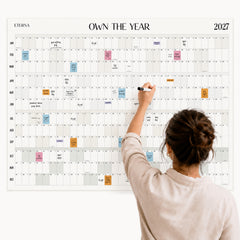
Eterna Goods Wall Calendar

Take a look at your day for a second.

You wake up, check your phone, skim through notifications, open a calendar app, maybe glance at a to-do list, and before you’ve even started working, your attention is already scattered.

We were promised that digital tools would make life easier. Faster. More organized. And in many ways, they do. But there’s a quieter truth most people are starting to notice:

The more we rely on digital tools, the harder it becomes to actually focus.

It’s not just about distractions, it’s about fragmentation.

Every notification pulls you in a different direction. Every app competes for your attention. Even your “productivity tools” live on the same device as social media, emails, and endless scrolling. The result? A constant mental tug-of-war.

And over time, that takes a toll:

  • You forget tasks you know you wrote down
  • You feel busy, but not productive
  • Your days blur together without a clear direction

This is not a personal failure. It’s a systems problem.

Digital planning tools are designed for convenience, but not always for clarity.

That’s why more people are quietly shifting back to something simpler. Something tangible. Something that doesn’t compete for their attention, but helps protect it.

Analog planning.

Not as a step backward, but as a smarter way forward.

Because when your schedule lives on paper, something changes. You slow down. You think more clearly. You become more intentional with your time.

And in a world that’s constantly pulling your focus away, that kind of control is powerful.

If you’ve been feeling overwhelmed by your digital tools, you’re not alone, and there’s a simpler, more focused way to plan your days.

The Rise of Digital Planning and Its Hidden Downsides

There’s a reason digital planning tools became so popular in the first place.

They’re convenient.
They sync across devices.
They remind you of things you might forget.

On paper, they sound like the perfect solution for staying organized.

And to be fair, digital calendars and apps do have their place, especially for scheduling meetings, setting alerts, and coordinating with others. But when it comes to deep focus and intentional planning, they often fall short in ways most people don’t immediately notice.

The Problem Is not the Tool, It’s the Environment

Your digital planner doesn’t exist in isolation.

It lives on the same device as:

  • Social media
  • Emails
  • Messages
  • News feeds
  • Notifications that never seem to stop

So even if you open your calendar with the best intentions, you’re only one tap away from distraction.

And more often than not, that’s exactly what happens.

1. Notification Overload Breaks Your Focus

Even quick glances at your phone come at a cost.

Research shows that it can take several minutes to fully refocus after an interruption. Multiply that across a day filled with pings, alerts, and reminders, and your attention becomes fragmented.

Instead of working with clarity, you’re constantly restarting.

2. Digital Clutter Creates Mental Clutter

Apps are designed to do everything:

  • Tasks
  • Notes
  • Goals
  • Timelines
  • Integrations

But more features don’t always mean more clarity.

In fact, it often leads to:

  • Overloaded interfaces
  • Endless toggling between views
  • A sense that you’re managing the tool more than your time

You don’t need more options, you need more direction.

3. “Out of Sight, Out of Mind” Planning

When your plans live inside an app, they’re easy to forget.

You don’t see them unless you open the app. And if you’re trying to reduce screen time you may not check it as often as you should.

Compare that to a physical calendar sitting on your desk or wall. It’s always there. Always visible. Always gently reminding you what matters.

4. The Illusion of Productivity

There’s something deceptively satisfying about organizing tasks digitally, color-coding, rearranging, checking boxes.

But sometimes, it creates a false sense of progress.

You feel productive… without actually moving forward.

Because planning isn’t just about organizing, it’s about committing.

Digital tools promise efficiency. But too often, they trade away something far more important:

Your ability to focus.

And that’s where analog planning begins to shine, not by doing more, but by helping you do what matters better.

Daily Wall Calendar

Why Analog Planning Is Making a Comeback

For a while, it felt like everything was moving in one direction, toward faster, smarter, fully digital systems.

But something interesting has been happening lately.

People are slowing down.

Not because they have less to do, but because they’re realizing that doing more isn’t the same as doing what matters.

And that shift is bringing analog planning back into the spotlight.

A Return to Intentional Living

You see it everywhere:

  • People choosing notebooks over note apps
  • Journaling instead of typing
  • Creating morning routines that don’t start with a screen

This is not nostalgia, it’s a response.

A response to burnout. To constant stimulation. To the feeling that your attention is always being pulled in a dozen directions.

Analog tools offer something digital ones often can’t:

A sense of control.

When you sit down with a physical calendar, there are no pop-ups. No tabs. No alerts. Just you and your time.

And that simplicity is powerful.

The Science Behind Slowing Down

There’s also a deeper reason this works.

Studies have shown that writing things down by hand:

  • Improves memory retention
  • Encourages deeper processing
  • Helps you prioritize more effectively

When you write something, you’re not just recording it, you’re thinking it through.

You’re deciding: Does this actually matter? Where does it fit? When will I do it?

That level of engagement is hard to replicate with a few taps on a screen.

Focus Feels Different on Paper

Digital tools are designed for speed.

Analog tools are designed for clarity.

And those two things aren’t always the same.

With a physical calendar:

  • You naturally slow down
  • You see your time as a whole, not in fragments
  • You become more selective about what you commit to

Instead of reacting to your schedule, you start shaping it.

Not All Paper Planners Are Created Equal

Of course, simply switching to paper isn’t enough.

A cluttered, poorly designed calendar can be just as overwhelming as a complicated app.

What makes the difference is intentional design:

  • Clean layouts that reduce visual noise
  • Thoughtful spacing that reflects real life
  • Materials that make you actually want to use it every day

Because when a calendar feels good to use, you’re far more likely to stick with it.

How Writing Things Down Improves Focus and Memory

There’s something almost deceptively simple about putting pen to paper.

No syncing. No loading screens. No features to learn.

And yet, this one small act, writing things down can completely change how you think, remember, and follow through.

1. Your Brain Works Differently When You Write

Typing is fast. Efficient. Automatic.

But that’s exactly the problem.

When you type, your brain often goes on autopilot. You’re recording information, but not necessarily processing it.

Writing by hand is different.

It forces you to slow down just enough to:

  • Clarify what you actually mean
  • Decide what’s important
  • Translate thoughts into something intentional

That extra layer of effort creates stronger mental connections.

Which is why people tend to remember handwritten plans far better than digital ones.

From Lists to Priorities

Digital tools make it easy to dump everything into a never-ending list.

But more tasks don’t equal more progress.

When you write things down in a physical calendar, space becomes a natural filter.

You start asking better questions:

  • Do I really need to do this today?
  • What actually matters most?
  • What can wait?

Instead of reacting to a long list, you begin to prioritize with purpose.

2. A Simple Ritual That Anchors Your Day

There’s also a rhythm that comes with analog planning.

Imagine this:

You sit down in the morning with your calendar.
You write out your top priorities.
You map your day in a way that feels realistic—not rushed.

No distractions. No switching between apps.

Just a few quiet minutes that set the tone for everything that follows.

That small ritual does more than organize your time—it centers your attention.

Why This Leads to Better Follow-Through

It’s not just about remembering more, it’s about doing more of what matters.

When you’ve physically written something down:

  • It feels more real
  • You’re more likely to commit to it
  • You’re less likely to ignore it

Because it’s not buried in a screen somewhere, it’s right in front of you.

Visible. Tangible. Clear.

The Distraction-Free Advantage of Physical Calendars

If focus had a natural enemy, it would be interruption.

Not big, obvious interruptions, but the small, constant ones:
A buzz. A banner. A quick check that turns into ten minutes.

Digital tools don’t just organize your time, they compete for your attention while you’re trying to use them.

Physical calendars don’t.

And that’s where their real advantage begins.

1. No Notifications, No Noise

When you open a paper calendar, nothing else is waiting for you.

No alerts.
No messages.
No “just one quick scroll.”

It’s a quiet space.

And in that space, your mind has room to think clearly, without being pulled in different directions every few seconds.

2. You See Your Time as a Whole

One of the most underrated benefits of a physical calendar is visibility.

You don’t just see a list, you see your life laid out in time.

  • Your week at a glance
  • Your commitments spaced out visually
  • Your available time clearly visible

That big-picture view makes it easier to:

  • Avoid overbooking
  • Plan realistically
  • Protect time for what matters

Digital tools can show this too, but you have to click, scroll, or switch views.

With a physical calendar, it’s already there.

3. It Becomes Part of Your Environment

A digital planner lives inside your device.

A physical calendar lives in your space.

On your desk. On your wall. Within your line of sight.

That changes everything.

Instead of something you check, it becomes something you see, effortlessly, throughout the day.

A gentle, constant reminder of what you’ve committed to.

4. A Tool You Actually Want to Use

Here’s something people don’t talk about enough:

You’re more likely to use tools that feel good to use.

The texture of quality paper.
A clean, uncluttered layout.
A design that doesn’t overwhelm you.

These small details matter.

Because when your calendar feels intentional you’re more likely to come back to it daily.

And consistency is where real productivity happens.

Own the Year UNDATED GIANT Dry Erase Wall Calendar

How to Build a Simple Daily Planning Habit

A great calendar is only as powerful as the habit behind it.

The good news? You don’t need a complicated system to make it work. In fact, the simpler your routine, the more likely you are to stick with it.

This isn’t about perfection. It’s about consistency.

Step 1: Start Your Day With a Quick Check-In

Before you open your phone, your email, or anything else—open your calendar.

Take one quiet minute to:

  • See what’s already scheduled
  • Get a feel for how your day is structured
  • Mentally prepare for what’s ahead

This small pause creates clarity before the noise begins.

Step 2: Write Your Top 3 Priorities

Instead of overwhelming yourself with a long to-do list, focus on just three things that truly matter.

Ask yourself:

  • If I only complete three things today, what would make the biggest difference?

Write them down clearly in your calendar.

This keeps your day focused, and prevents you from drifting into busywork.

Step 3: Block Your Time Visually

Now, give those priorities a place in your day.

Sketch out:

  • When you’ll work on each task
  • How long you’ll realistically need
  • Where you have breathing room

You don’t need to be exact, just intentional.

Seeing your time laid out helps you avoid overcommitting and makes your plan feel achievable.

Step 4: Keep It Visible

Place your calendar somewhere you can easily see it:

  • On your desk
  • Beside your workspace
  • Within your natural line of sight

The goal is simple: make it effortless to check throughout the day.

Because the more visible it is, the more it guides your actions without extra effort.

Step 5: Do a 2-Minute Evening Reset

At the end of your day, come back to your calendar briefly.

  • Check off what you completed
  • Move anything unfinished
  • Write down one or two priorities for tomorrow

This closes the loop—and sets you up for a smoother start the next day.

Why This Habit Actually Sticks

There’s no app to open.
No system to manage.
No learning curve.

Just a simple rhythm:

  • Look
  • Write
  • Act
  • Review

And over time, that rhythm becomes automatic.

Making the Switch: What to Expect

Switching from digital planning to a physical calendar sounds simple—and it is.

But like any meaningful change, there’s a short adjustment period.

Not because it’s harder.
But because it’s different.

At First, It Might Feel Slower

You’re used to tapping, typing, and syncing everything instantly.

Writing things down takes a bit more time.

You might notice yourself pausing more. Thinking more. Deciding more carefully what to include.

That’s not inefficiency.

That’s intentionality.

And it’s exactly where the value comes from.

You May Feel the Urge to “Check Your Phone Anyway”

Habit is powerful.

Even if you’ve planned your day on paper, you might still instinctively reach for your phone to double-check things.

That’s normal.

Give it a few days.

As your calendar becomes your primary reference point, that urge starts to fade, and gets replaced with something better:

Confidence in your plan.

Clarity Comes Faster Than You Expect

Most people notice a shift within the first few days.

  • Your priorities feel clearer
  • Your schedule feels more realistic
  • You spend less time “figuring out what to do next”

Because everything is already laid out in front of you.

No digging through apps. No switching screens.

Just a clear path forward.

You’ll Start to Feel Less Mentally Cluttered

One of the biggest (and most unexpected) benefits is how much lighter your mind feels.

When your plans live on paper:

  • You’re not constantly trying to remember everything
  • You’re not reopening apps over and over
  • You’re not carrying your entire schedule in your head

It’s all there visible, stable, and easy to trust.

Follow-Through Becomes Easier

There’s a subtle psychological shift that happens when you write things down.

Your plans feel more real.
More grounded.
More yours.

And because of that, you’re more likely to stick to them.

Not perfectly, but more consistently.

Switching to analog planning isn’t about doing things the old way.

It’s about doing them in a way that actually supports how you think and work.

And once that clicks, it doesn’t feel like a change anymore.

It just feels… better.

Conclusion 

At the end of the day, productivity isn’t really about tools.

It’s about attention.

Where you place it.
How easily it gets pulled away.
And whether your environment helps you protect it, or constantly interrupts it.

Digital tools promised to help us manage our time.
But too often, they end up managing us.

More alerts. More inputs. More noise.

And in all of that, focus becomes harder to hold onto.

If you’ve made it this far, chances are you’re looking for a better way to plan your days, one that actually supports your focus instead of competing with it.

That’s exactly what a thoughtfully designed physical calendar is built for.

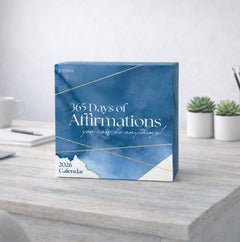
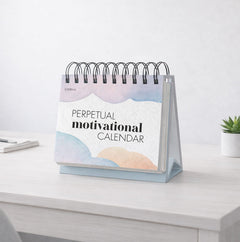
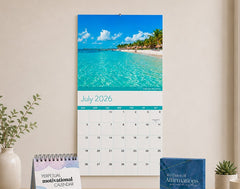
If you’re ready to simplify your planning, reduce distractions, and move through your days with more clarity, explore the Eterna Goods 2026 calendar collection.

It’s a small shift.

But it can change how you work, how you think, and how your days feel.