






The Planning Journal · Family Organization
One wall, one calendar, one place everyone checks. That’s the whole family command center.
Practice moved to Thursday. Grandma lands on the 14th. The permission slip is due tomorrow. In most homes these plans live in a dozen places: group texts, school emails, a work calendar and somebody’s memory. Then the question of the week becomes “Wait, what’s happening Saturday?”
A family wall calendar fixes that by giving every plan one home that everyone can see. Here’s how to set one up for 2027 in an afternoon, what belongs on it and the small weekly habit that keeps it working.
Key takeaways
- Hang one big calendar where the whole family passes several times a day, usually the kitchen or the main entrance.
- Give each person a marker color, then add fixed dates first: birthdays, school breaks, holidays and trips.
- Put only what affects someone else’s day on the wall. Private to-dos stay in a personal planner.
- Pair the year view with a weekly page for pickups, dinners and this week’s details.
- A 10-minute Sunday check-in keeps the whole system current.
What a Family Command Center Actually Is
A family command center is simply a spot on the wall where your household’s plans come together. At its heart is a calendar everyone can read from across the room. Around it you can add a weekly page, a marker cup and a few stickers. You don’t need a Pinterest-ready mudroom. One wall and one calendar are enough to start.
Fewer “nobody told me” moments
When the plan is on the wall, kids and partners can check it themselves instead of asking.
Collisions show up early
A tournament on the same weekend as a family trip is obvious when every month sits side by side.
Kids learn to plan
Children who own a color and add their own events start checking the calendar before asking what’s next.
The mental load gets shared
The plan lives on the wall instead of in one person’s head, so anyone can see what’s coming.
Step 1: Choose the Wall
Pick a wall the family walks past several times a day. The kitchen is the most common choice, followed by a hallway near the main door. Hang the calendar at adult eye level, and make sure kids can reach at least the bottom rows or have a step stool nearby. Keep markers within arm’s reach: if nobody can find a pen, nobody will update the calendar.
Size matters here. A family calendar needs room for several people’s plans in a single day, and it needs to be readable from a few steps away. Our guide on how to choose the right wall calendar size and placement goes deeper if you’re deciding between formats.
Step 2: Pick a Calendar Big Enough for Everyone
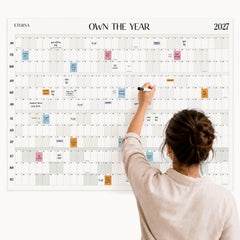
For most families, the full year in one view works best, because it shows the big picture that a monthly page hides: school breaks, birthdays, travel and busy seasons all at once.
- Dated Own The Year Calendar, 2027: January through December 2027 on one 4 ft x 3 ft sheet with 2.3" x 1.5" date boxes. Comes with 2 dry-erase markers, 125 sticky notes, 10 wall-mount stickers and an erasing towel.
- Undated Own The Year Calendar: the same 4 ft x 3 ft size with a January–December layout you date yourself, so you can start any time and wipe it clean for a new year.
- 2026-2027 Midyear/Academic Own The Year: July 2026 through June 2027, a good fit if your family runs on the school year.
- Spiral Dry Erase Wall Calendar: a 14" x 24" monthly dry erase calendar for 2027 with a metal hanging bar, for smaller walls or families who prefer one month at a time.
The centerpiece
A calendar for the whole family


Still deciding between a printed year and a blank one? Here’s our breakdown of undated vs. dated wall calendars.
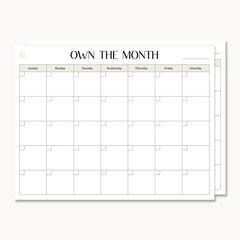
Short on wall space, or prefer a month at a time? The Undated Own The Month Calendar ($29.00) comes with two 22" x 17" dry erase sheets with about 3" x 2.7" daily squares, so you can hang this month and next side by side.
Step 3: Give Everyone a Color
Color is what makes a busy family calendar readable at a glance. Give each person one marker color and use it for the whole year. Some families prefer to color by category instead (school, sports, work, social, appointments). Either works. Just pick one system and stick with it.
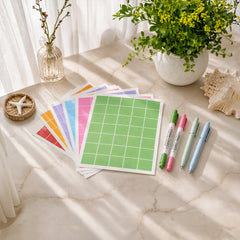
The Fine Tip Dry Erase Marker Set has six colors (pink, red, orange, green, purple and brown) with a 1.0mm tip for event names and a 0.5mm tip for times and details. That’s one color each for a family of up to six. Keep a small cup on the wall or the counter below so markers stay where they’re needed.

Step 4: Add the Fixed Dates First
-
Birthdays and anniversaries
Go through everyone’s phone contacts and add the dates you never want to miss. Holiday stickers make them easy to spot.
-
School calendar
Add first and last days, breaks, early-release days and conferences. Most schools publish these for the whole year.
-
Holidays and traditions
Mark the holidays you celebrate and the family traditions around them, like a yearly trip or a cookie-baking day.
-
Trips and big events
Use full-size Planning Block Stickers for trips, camps and visits that span several days, and write the details inside.
-
Recurring commitments
Add seasons rather than every single practice: “Soccer season starts” is more useful on a year view than 30 identical notes.
Planning Block Stickers are removable, so when a trip moves or a season gets rescheduled, you peel and re-place instead of scribbling over it.
Plan in color
Stickers and markers for every plan


What Belongs on the Wall (and What Doesn’t)
The most common reason a family calendar gets ignored is that it’s too crowded to read. A simple rule: put it on the wall if it changes someone else’s day.
Put it on the wall
Pickups, drop-offs and anything that needs a ride. Doctor, dentist and vet appointments. Evening plans that affect dinner. Deadlines with something to prepare, like costume day or a form to return. Travel and who’s away. Birthdays you need to shop for ahead.
Keep it off
Routine work meetings. Things everyone already knows, like “school” on every weekday. Personal to-do lists. Maybes: a tentative plan on the wall tends to become an argument later. Add it once it’s confirmed.
Step 5: Add a Weekly Layer
The year view answers “what’s coming?” A weekly page answers “who’s doing what this week?” That’s where dinner plans, pickup times and one or two to-dos per person belong. Keeping them off the big calendar keeps it clean.
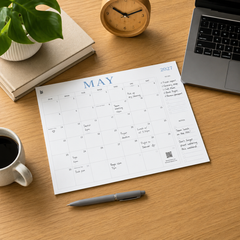
The Spiral Weekly Planning Calendar Pad works well next to a wall calendar: 52 undated Monday–Sunday pages at 11" x 17", with sections for tasks, priorities and notes, plus a built-in hanging loop. Because it’s undated, you can skip a week without wasting a page. Prefer to plan at the counter? The 2027 12-Month Flat Desk Calendar gives you a 22" x 17" month with roomy daily squares and a to-do section. For more on using both together, see wall calendar vs. desktop calendar.
This week
For the week-by-week details


Step 6: Hold a 10-Minute Sunday Check-In
A family calendar only works if it stays current, and the easiest way to keep it current is a short weekly habit. Pick a time when most of the family is home, like Sunday after dinner, and run through the same few questions:
- What’s happening this week? Read the next seven days out loud.
- Who needs a ride, and who’s driving? Write the name next to the event.
- What needs preparing? Forms, gifts, snacks, uniforms or anything due.
- What’s new? Anyone adds plans they’ve picked up since last week.
- What’s coming next month? A quick look ahead catches birthdays and trips early.
It also helps to have one person check each week that the calendar is up to date. That job can rotate, and older kids often enjoy it.
If it’s on the wall, nobody has to keep it in their head.
Make It Fun for Kids
Kids are far more likely to use a calendar they helped build. Let them pick their color, place their own stickers and write in their own events. A countdown to a birthday or a trip is a great first job for a young planner. You can also give younger kids a small daily calendar of their own as part of the morning routine: the 2027 Kids Jokes Calendar has 365 kid-friendly jokes, and the Kids Coloring Calendar has a new coloring page every day. Both are 4.25" x 4.25" with a built-in stand. For more ideas, see how to use calendars for kids and fun ways to use a kids’ jokes calendar for family bonding.
Start With the Holidays
November and December are the most crowded months on most family calendars, which makes them a great time to set up your command center. If your family runs on the school year, the 2026-2027 Midyear/Academic or an undated Own The Year lets you start this week. Our guide to planning the holidays on one calendar walks through travel, hosting and gift dates. Then, when January comes, use the same wall to set family goals with our 2027 resolutions plan.
Best value
The whole setup in one box


Common Questions
Where should I hang a family wall calendar?
Somewhere the whole family passes several times a day, at adult eye level. The kitchen is the most common choice, followed by a hallway near the main door. Keep markers right next to it.
How do you color-code a family calendar?
The simplest system is one color per person, used all year. If your family has lots of shared activities, color by category instead, such as school, sports, work and social plans. The Fine Tip Dry Erase Marker Set has six colors.
Should we use a paper calendar or a shared app?
Many families use both. A shared app is good for reminders on the go; the wall calendar is for the plans everyone in the house needs to see at a glance, including kids who don’t have phones. See wall vs. desktop calendars for more on mixing formats.
What size calendar works for a family?
Bigger is better when several people share one calendar. The Own The Year calendars are 4 ft x 3 ft with 2.3" x 1.5" date boxes, so the whole year fits in one view with room for more than one plan a day.
How do you keep a family calendar from getting messy?
Only add things that affect someone else’s day, use removable stickers for plans that might move, keep weekly details on a separate page and wipe or update the calendar during a short Sunday check-in. For upkeep tips, see how to care for your calendar.
One Wall. One Plan. Everyone on the Same Page.
A family command center doesn’t have to be elaborate. A big calendar, a color for each person, a weekly page and ten minutes on Sunday will cover most of what a busy household needs. Set it up this weekend, add the dates you already know and let the year fill in from there.
The collection
Plan your family’s year
Own The Year wall calendars, stickers and planning kits for busy households.
Shop Own The Year Calendars