



Guide to Choosing the Best Monthly Desk Calendar

Guide to Choosing the Best Monthly Desk Calendar

Staying organized doesn't have to be complicated. While digital calendars and reminder apps have their place, there's something uniquely effective about having your entire month laid out in front of you. A monthly desk calendar provides a clear, at-a-glance view of your schedule, making it easier to plan ahead, manage deadlines, and keep important dates from slipping through the cracks.

Whether you're juggling work meetings, school assignments, family activities, or personal goals, the right desk calendar can become one of the most valuable tools in your workspace. However, with so many sizes, layouts, and features available, choosing the best one isn't always as simple as picking the first calendar you see.

In this blog, we'll walk you through everything you need to know before buying a monthly desk calendar. You'll learn which features matter most, how to choose the right size and layout for your needs, and what separates a great desk calendar from an average one. By the end, you'll be confident in selecting a calendar that helps you stay organized, productive, and focused throughout the year.

Why a Monthly Desk Calendar Still Matters

In a world filled with smartphones, smartwatches, and productivity apps, you might wonder whether a paper desk calendar is still worth using. The answer is yes, and for many people, it's an essential part of staying organized.

A monthly desk calendar offers something digital tools often can't: constant visibility. Because it sits on your desk or workspace, your schedule is always within sight. There's no need to unlock your phone, open an app, or scroll through appointments. A quick glance is all it takes to see what's coming up, helping you stay aware of deadlines, meetings, birthdays, and important events throughout the month.

Another advantage is fewer digital distractions. Checking your phone for your schedule can easily turn into reading emails, browsing social media, or responding to messages. A physical calendar keeps your focus where it belongs, on planning your day and accomplishing your goals.

Monthly desk calendars also make it easier to see the bigger picture. Instead of viewing one day at a time, you can spot busy weeks, prepare for upcoming projects, and avoid scheduling conflicts before they happen. This broader perspective is especially helpful for professionals managing multiple deadlines, students balancing classes and assignments, parents coordinating family activities, and small business owners keeping track of appointments and important dates.

If you're looking for a straightforward way to stay organized without relying solely on digital devices, a thoughtfully designed monthly desk calendar is a practical solution. With spacious writing areas, an easy-to-read layout, and durable construction, the right calendar becomes more than just a place to record dates, it becomes part of your daily routine.

The Benefits of Using a Monthly Desk Calendar

A monthly desk calendar does much more than display the dates. When used consistently, it becomes a simple but powerful planning tool that helps you stay organized, manage your time more effectively, and reduce the stress of keeping track of a busy schedule. Here are some of the biggest benefits of incorporating one into your daily routine.

1. Better Time Management

One of the greatest advantages of a monthly desk calendar is the ability to see your entire month at a glance. Instead of focusing only on today's tasks, you can plan weeks ahead, identify busy periods, and prepare for upcoming deadlines before they become urgent.

Whether you're scheduling client meetings, planning vacations, organizing school projects, or tracking bill due dates, having a full-month overview makes it easier to balance your commitments and avoid overbooking yourself.

2. Increased Productivity

A well-organized workspace often leads to a more productive day, and a monthly desk calendar plays an important role in that process. Keeping your schedule visible helps you prioritize tasks, stay on track with projects, and minimize the chance of forgetting important responsibilities.

Rather than relying on memory alone, you have a dedicated place to record deadlines, appointments, and goals. This frees up mental energy so you can focus on completing your work instead of trying to remember what comes next.

3. Less Stress and Mental Clutter

Trying to remember every appointment, meeting, birthday, and deadline can quickly become overwhelming. Writing them down on a monthly desk calendar helps clear your mind and gives you confidence that nothing important will be overlooked.

When your schedule is organized in one convenient place, you spend less time worrying about what you've forgotten and more time focusing on the present. Many people find that this simple habit reduces daily stress and creates a greater sense of control over their routines.

4. Helps You Stay Consistent with Goals

Monthly desk calendars aren't just for appointments, they're excellent tools for tracking personal and professional goals. Seeing your goals written down each day serves as a gentle reminder to stay committed and measure your progress.

You can use your calendar to monitor:

  • Fitness routines
  • Study schedules
  • Work projects
  • Savings goals
  • Meal planning
  • Habit tracking
  • Home improvement projects
  • Family activities

Over time, these small daily reminders help build consistency and make long-term goals feel more manageable.

5. Encourages Better Planning

Planning ahead is easier when you can visualize the entire month. A desk calendar allows you to spread out major tasks, prepare for seasonal events, and coordinate schedules with family members or coworkers.

Instead of reacting to deadlines at the last minute, you can anticipate them and make thoughtful decisions about how to use your time. This proactive approach often leads to fewer surprises and smoother, more productive weeks.

6. Works for Every Lifestyle

One of the reasons monthly desk calendars remain so popular is their versatility. Almost anyone can benefit from having an easy-to-read monthly planner within reach.

They're especially useful for:

  • Professionals managing meetings and project deadlines
  • Students organizing assignments, exams, and extracurricular activities
  • Parents coordinating family schedules, school events, and appointments
  • Teachers planning lessons and classroom activities
  • Small business owners tracking client appointments, invoices, and important business dates
  • Retirees keeping up with medical appointments, travel plans, hobbies, and family gatherings

No matter your schedule, having a dedicated space to organize your month helps you stay focused and prepared.

7. A Reliable Planning Tool You Can Count On

Unlike digital calendars that depend on batteries, internet access, or notifications, a monthly desk calendar is always available. It won't run out of power, require software updates, or compete for your attention with emails and social media.

Its simplicity is part of its strength. Every time you sit down at your desk, your plans are right in front of you, making it easier to stay organized and make informed decisions throughout the day.

Eterna Desk Calendars

Types of Monthly Desk Calendars

Not all monthly desk calendars are designed the same. While they all help you keep track of dates and appointments, the right choice depends on how you plan, how much writing space you need, and where you'll be using it. Understanding the different types of monthly desk calendars can help you find one that complements your lifestyle and makes staying organized even easier.

1. Standard Monthly Desk Calendar

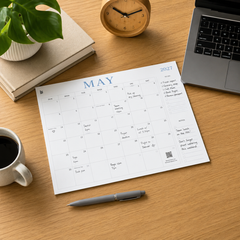
A standard monthly desk calendar is one of the most popular options because it's simple, practical, and easy to use. Each month is displayed on a single page with clearly defined daily blocks, giving you enough space to record appointments, deadlines, reminders, and important events.

This style works well for anyone who wants an uncomplicated planning system without unnecessary extras. It's ideal for home offices, workspaces, students, and families looking for an easy way to stay organized.

Best for:

  • Everyday scheduling
  • Home offices
  • Office desks
  • Personal planning
  • Family organization

2. Large Monthly Desk Calendar

If you like to write detailed notes or manage a busy schedule, a large desk calendar may be the better choice. These calendars offer generous daily writing blocks, making it easier to include meeting details, project deadlines, to-do lists, or multiple appointments on the same day.

The larger format also improves readability, allowing you to quickly scan your schedule without feeling cramped.

Large desk calendars are especially popular with professionals, teachers, healthcare workers, and anyone who uses their calendar throughout the day.

Best for:

  • Busy professionals
  • Managers and executives
  • Teachers
  • Families with multiple schedules
  • Small business owners

3. Lay-Flat Desk Calendar

A lay-flat desk calendar is designed to remain flat while you're writing, eliminating the frustration of curled pages or constantly holding the calendar open. This feature creates a smoother writing experience and makes it easier to add notes anywhere on the page.

Lay-flat calendars are particularly helpful if you frequently update your schedule or use your calendar as a daily planning tool. They also tend to look neater on your desk, providing a clean and professional appearance.

Many people appreciate the added convenience because it allows the calendar to function as both a planner and a desk pad throughout the year.

Best for:

  • Daily planners
  • Office professionals
  • Students
  • Anyone who writes frequently on their calendar

4. Academic Monthly Desk Calendar

Unlike traditional yearly calendars that begin in January, academic desk calendars typically follow the school year, often running from July or August through June or December of the following year.

They're designed for students, teachers, professors, and parents who naturally organize their schedules around semesters, school events, holidays, and extracurricular activities.

An academic calendar makes long-term planning easier without requiring you to switch calendars in the middle of a school year.

Best for:

  • College students
  • High school students
  • Teachers
  • School administrators
  • Parents with school-aged children

5. Undated Monthly Desk Calendar

An undated desk calendar offers maximum flexibility because the dates are left blank for you to fill in yourself. This means you can begin using it at any time of the year without wasting unused months.

Undated calendars are perfect if you don't need a planner every month or if you're looking for a thoughtful gift that can be used whenever the recipient is ready.

They're also an excellent choice for goal planning, project management, habit tracking, or seasonal planning where specific calendar years aren't important.

Best for:

  • Flexible planners
  • Goal tracking
  • Project planning
  • Small businesses
  • Gift giving

Which Type Is Right for You?

The best monthly desk calendar is the one that fits naturally into your daily routine. If your schedule is relatively simple, a standard monthly calendar may be all you need. If you regularly manage multiple projects or appointments, a larger calendar with spacious writing areas can make planning much easier. Students and educators often benefit from academic calendars, while undated versions offer year-round flexibility for anyone who prefers to start planning on their own schedule.

As you compare different styles, think about how you'll actually use your calendar. Consider how much writing space you need, whether you prefer a lay-flat design, and where the calendar will sit on your desk. Choosing a calendar that matches your planning habits will make it more enjoyable to use and more likely to become part of your everyday routine.

Features to Look for When Choosing the Best Monthly Desk Calendar

A monthly desk calendar may seem like a simple purchase, but the right features can make a noticeable difference in how enjoyable and effective it is to use every day. A well-designed calendar doesn't just help you remember important dates—it makes planning easier, keeps your workspace organized, and stands up to daily use throughout the year.

Before you choose a calendar, consider these key features.

1. Spacious Daily Writing Blocks

One of the first things to look at is the amount of writing space available for each day. If you only jot down an occasional reminder, smaller date boxes may be enough. But if your days are filled with meetings, appointments, assignments, or family activities, larger writing blocks provide much more flexibility.

Ample writing space allows you to include:

  • Work meetings
  • Project deadlines
  • Doctor and dental appointments
  • School assignments
  • Family activities
  • Birthdays and anniversaries
  • Bill due dates
  • Daily reminders

A calendar with roomy daily boxes also keeps your schedule neat and easy to read, reducing the need for abbreviations or cramped handwriting.

2. High-Quality, Thick Paper

Paper quality is often overlooked, but it's one of the most important features of a desk calendar, especially if you write on it frequently.

Thicker paper provides a smoother writing experience and helps prevent ink from bleeding through to the next page. Whether you prefer pencils, gel pens, ballpoint pens, or fine-tip markers, quality paper keeps your notes looking clean and professional.

Durable paper also holds up better over months of daily use, page turning, and occasional erasing.

3. Easy-to-Read Monthly Layout

A good desk calendar should make it effortless to find the information you need. Clean layouts with clearly printed dates and uncluttered designs allow you to scan your schedule in seconds.

Look for calendars that include:

  • Clearly defined daily boxes
  • Easy-to-read date numbers
  • Distinct weekends
  • Previous and upcoming month references
  • Plenty of white space for notes

An organized layout reduces visual clutter and helps you focus on your priorities instead of searching for information.

4. Lay-Flat Design

If you've ever tried writing on a calendar that curls up or won't stay open, you know how frustrating it can be.

A lay-flat desk calendar solves this problem by remaining flat while you write, creating a smooth, stable surface for planning. This design makes it easier to add appointments, cross off completed tasks, or update your schedule without constantly adjusting the pages.

It's a small feature that can make a big difference if you use your calendar every day.

5. Durable Binding

The binding plays a major role in how well a calendar lasts throughout the year.

A sturdy binding helps pages stay securely in place despite months of daily use. Whether you prefer a glued edge, spiral binding, or another durable construction, the calendar should feel solid and reliable.

Quality binding also allows pages to turn smoothly while maintaining the calendar's overall appearance.

6. Protective Corner Covers or Reinforced Edges

Because desk calendars stay in constant use, corners and edges can become worn over time.

Calendars with reinforced corners or protective edge designs tend to stay looking newer for longer, even with frequent handling. This added durability is especially helpful in busy offices, classrooms, or shared workspaces.

7. Design That Fits Your Workspace

Function is important, but appearance matters too. Since your desk calendar will likely remain in view every day, choose one with a design that complements your workspace.

Many people prefer clean, minimalist layouts that keep the focus on planning, while others enjoy colorful accents or seasonal themes. The best design is one that encourages you to use your calendar consistently without creating unnecessary visual distractions.

Choose Features That Match Your Planning Style

The "best" monthly desk calendar isn't necessarily the one with the most features, it's the one that supports the way you organize your life. Think about how much you write, where your calendar will be used, and which features will make planning easier day after day.

If you rely on your calendar for work, school, family schedules, or personal goals, investing in a thoughtfully designed calendar with spacious writing areas, quality materials, and a user-friendly layout can make planning feel simpler and more enjoyable.

Annual Bible Verse Calendar

Which Monthly Desk Calendar Fits Your Lifestyle?

The best monthly desk calendar isn't simply the one with the most features, it's the one that fits naturally into your daily routine. Your planning needs are unique, and choosing a calendar that complements your lifestyle makes it much more likely that you'll use it consistently.

Whether you're managing a busy career, balancing schoolwork, organizing family activities, or planning personal goals, there's a desk calendar designed to support the way you work and live.

1. For Busy Professionals

If your workday is filled with meetings, project deadlines, client appointments, and travel plans, your calendar needs plenty of room for detailed scheduling.

Look for a monthly desk calendar with:

  • Large daily writing blocks
  • A clean, uncluttered layout
  • Thick paper that handles frequent writing
  • A durable, lay-flat design for easy updates
  • A notes section for priorities and follow-ups

Keeping your calendar visible on your desk allows you to quickly check your schedule throughout the day, helping you stay prepared without constantly switching between digital apps and paper notes.

2. For Students

Students often juggle classes, assignments, exams, extracurricular activities, and part-time jobs. A monthly desk calendar makes it easier to see upcoming deadlines and avoid last-minute cramming.

Helpful features include:

  • Spacious daily boxes for assignments and due dates
  • An academic-year format for school planning
  • Space for monthly goals and study schedules
  • Easy-to-read dates for quick reference

Many students also use different colored pens or highlighters to organize subjects, making it easy to identify important deadlines at a glance.

3. For Parents and Families

Managing a household often means keeping track of multiple schedules at once. Between school events, sports practices, doctor's appointments, birthdays, and family activities, it's easy for important dates to overlap.

A large monthly desk calendar can become the family's central planning hub.

Use it to organize:

  • School activities
  • Children's extracurricular schedules
  • Family vacations
  • Medical appointments
  • Meal planning
  • Household reminders
  • Bill due dates

Placing the calendar in a shared space, such as a home office or kitchen workspace, helps everyone stay informed and reduces scheduling conflicts.

4. For Small Business Owners

Running a business means balancing countless responsibilities, from client meetings to inventory orders and marketing campaigns. A monthly desk calendar offers a simple way to keep important business activities visible throughout the month.

Business owners often use their calendars to track:

  • Client appointments
  • Project milestones
  • Invoice due dates
  • Product launches
  • Employee schedules
  • Marketing campaigns
  • Tax deadlines

Having a full-month overview makes it easier to plan ahead and stay on top of multiple priorities without feeling overwhelmed.

5. For Teachers and Educators

Teachers coordinate lesson plans, grading schedules, parent conferences, school events, and classroom activities, all while managing their own personal commitments.

An academic monthly desk calendar provides a convenient place to organize:

  • Lesson planning
  • Testing dates
  • Field trips
  • Parent meetings
  • Professional development
  • School holidays

With the entire month visible, educators can prepare for busy periods and stay ahead of important deadlines.

6. For Goal Setters and Habit Trackers

Not every calendar is used only for scheduling appointments. Many people use monthly desk calendars to stay accountable to personal goals and build positive habits.

You can dedicate space each day to tracking:

  • Exercise routines
  • Reading goals
  • Savings progress
  • Water intake
  • Meal planning
  • Journaling
  • Daily gratitude
  • Personal projects

Seeing your progress throughout the month creates motivation and makes it easier to maintain consistency.

    Conclusion

    A monthly desk calendar is much more than a place to write down appointments, it's a simple yet powerful tool that helps you stay organized, manage your time with confidence, and keep your goals in clear view. Whether you're coordinating a busy work schedule, planning family activities, keeping up with school assignments, or simply trying to bring more structure to your days, the right calendar can make planning feel easier and more intentional.

    As you choose a monthly desk calendar, think beyond appearance. Consider the features you'll use every day, such as spacious writing blocks, a clear monthly layout, quality paper, and a durable design that stands up to daily use. A calendar that matches your planning style is one you'll enjoy using consistently, making it easier to stay on top of important dates and reduce the stress of juggling multiple responsibilities.

    The best planning system is one that works for your lifestyle. Some people prefer a large desk calendar with plenty of writing space, while others appreciate the flexibility of an academic or undated format. Whatever your needs, investing in a well-designed calendar can help you stay focused, prepared, and productive throughout the year.

    If you're ready to create a more organized workspace and simplify your monthly planning, now is the perfect time to choose a calendar that fits your routine. Our collection of monthly desk calendars is thoughtfully designed with spacious layouts, durable construction, and practical features to support students, professionals, families, teachers, and anyone who wants to stay organized with confidence.

    Browse our collection of monthly desk calendars today and discover how the right calendar can help you plan smarter, stay productive, and make every month more manageable.

    Â