



How to Build a Positive Morning Routine with a Daily Calendar

How to Build a Positive Morning Routine with a Daily Calendar

There’s a version of your morning that probably feels very familiar.

The alarm goes off. You hit snooze (maybe more than once). You reach for your phone. A quick check turns into scrolling. Before you realize it, you're rushing, mentally scattered, already behind, and unsure of where your energy has gone.

It’s not that you’re doing anything wrong. It’s just that your morning doesn’t have a clear starting point.

And that matters more than most people realize.

Your morning routine is not just a checklist; it’s the tone-setter for your entire day. The way you begin influences your foc0us, your mood, your patience, and even your productivity hours later. When your morning feels reactive, the rest of your day often follows suit.

But here’s the encouraging part:
You don’t need a perfect routine to create a powerful one.

You don’t need to wake up at 5 AM, meditate for 30 minutes, journal three pages, and run five miles. In fact, trying to do too much is one of the biggest reasons morning routines fail.

What actually works is something much simpler:
A small, consistent habit that anchors your morning and gives it direction.

That’s where a daily calendar quietly becomes a game-changer.

It’s not just a way to track dates, it becomes your first intentional action of the day. A visual cue. A moment of pause. A gentle nudge toward positivity before the noise of the world sets in.

Instead of starting your day by reacting to notifications, you begin with something you chose, a thought, a memory, a goal, or even a simple moment of appreciation.

And that shift, from reactive to intentional, is where better mornings begin.

Imagine this instead:
You wake up, flip to a new page, take in something meaningful, a quote, a photo, a reminder and give yourself just a few seconds to reset before the day begins.

No pressure. No overwhelm. Just a better starting point.

The Science Behind Morning Routines and Habit Formation

If you’ve ever tried to “fix” your mornings and couldn’t stick with it, you’re not alone, and it’s not a lack of discipline.

It’s usually a lack of structure.

Our brains don’t run on motivation. They run on patterns.

At the core of every habit is a simple loop: cue → routine → reward

  • Cue: the trigger that tells your brain it’s time to act
  • Routine: the behavior itself
  • Reward: the benefit your brain associates with it

When this loop is clear and consistent, habits feel almost automatic. When it’s missing or messy, everything feels like effort.

This is why most morning routines fall apart, they rely too heavily on willpower and not enough on reliable cues.

Why Mornings Are the Best Time to Build Habits

Your brain is actually at an advantage in the morning:

  • Fewer decisions = less mental fatigue
  • Higher focus before distractions kick in
  • Greater consistency because mornings repeat daily

In other words, mornings are prime real estate for building habits that stick.

But only if you make the starting point obvious.

The Power of Visual Triggers

One of the most overlooked tools in habit-building is visibility.

When something is right in front of you, it becomes easier to act on, without thinking too much about it.

That’s why a daily calendar works so well.

It acts as a built-in cue:

  • You see it → you interact with it → you begin your routine

No decision-making required. No “I’ll start tomorrow.”

It’s already there, waiting for you..

Where a Daily Calendar Fits In

A daily calendar isn’t trying to overhaul your life overnight.

It simply becomes:

  • Your cue to begin
  • Your routine starter
  • Your first small win of the day

And that’s exactly what makes it effective.

Because the best morning routines don’t start with effort, they start with something easy enough to repeat.

Why Most Morning Routines Fail (And How to Fix Yours)

Let’s be honest, most morning routines sound great on paper.

Wake up early. Exercise. Journal. Meditate. Eat healthy. Plan your day.

It’s a nice idea… until real life happens.

You’re tired. You’re busy. You hit snooze. And suddenly that “perfect routine” turns into something you avoid altogether.

If that’s been your experience, the problem isn’t you, it’s the approach.

The 3 Biggest Reasons Morning Routines Don’t Stick

1. They’re Too Complicated

Many routines try to pack in too many habits at once.
The result? Overwhelm.

When your brain sees a long list first thing in the morning, it resists. Even good habits can feel like pressure when there are too many of them.

2. They Rely on Motivation Instead of Systems

Motivation is unpredictable. Some mornings you have it, most mornings you don’t.

If your routine depends on “feeling like it,” it won’t last.

What actually works is a system, something that guides your behavior automatically, even on low-energy days.

3. They Start with the Wrong Trigger

For most people, the first “habit” of the day is grabbing their phone.

And once that happens:

  • Your attention is pulled in different directions
  • Your mood is influenced by outside inputs
  • Your time disappears faster than you expected

By the time you think about your routine, you’ve already lost momentum.

The Simple Fix: Make Your Routine Frictionless

If you want a routine that sticks, it needs to feel easy to start.

Not perfect. Not impressive. Just easy.

This is where the idea of frictionless habits comes in:

  • No setup required
  • No thinking required
  • No resistance

Just a natural next step.

Why a Daily Calendar Changes the Game

A daily calendar works because it removes friction entirely.

It doesn’t ask much from you:

  • No planning
  • No prep
  • No time commitment beyond a few seconds

You simply:

  • See it
  • Flip the page
  • Engage with what’s there

That’s it.

But that small action does something powerful, it interrupts autopilot.

Instead of reaching for your phone, you’re starting with something intentional.

Instead of reacting, you’re choosing.

A Better Way to Think About Your Morning

Instead of asking:
“What’s the perfect routine?”

Try asking:
“What’s the easiest way to start my day well?”

For many people, that answer is surprisingly simple.

A visible, physical cue. A small moment of intention. A gentle start.

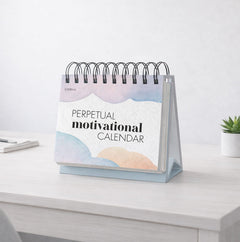
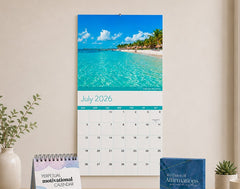
2026 Motivational Calendar

How a Daily Calendar Transforms Your Morning

At first glance, a daily calendar seems simple, just a page, a date, maybe a quote or a photo.

But when you place it into your morning routine, it becomes something much more powerful.

It becomes your starting point.

1. It Gives Your Morning a Clear Beginning

Most mornings feel scattered because they don’t have a defined “first step.”

You wake up… and then what?

When a daily calendar is part of your routine, that question disappears.

There’s no guessing. No delay. No drifting into distractions.

You begin by flipping the page.

And just like that, your day has officially started, with intention.

2. It Creates a Moment of Pause (That Most People Skip)

Modern mornings are fast. Notifications, messages, responsibilities—they all compete for your attention right away.

A daily calendar introduces something rare:

A pause.

A few seconds where you:

  • Look at something meaningful
  • Take a breath
  • Ease into your day instead of rushing into it

That pause might feel small, but it changes your mental state. You’re no longer reacting, you’re arriving.

3. It Builds a Sense of Progress and Momentum

There’s something surprisingly satisfying about turning a page.

It’s physical. It’s visible. It’s final.

That simple action signals:

  • A fresh start
  • A new opportunity
  • A clean slate

Over time, those page turns become a quiet record of consistency. You’re showing up, day after day.

And that builds momentum in a way that digital tools rarely do.

4. It Shifts Your Focus Toward Positivity

What you see first in the morning matters.

If your first input is stress (emails, news, social media), your mindset follows.

But if your first moment includes something uplifting, a quote, a photo, a memory, it gently redirects your focus.

Not in a forced, overly positive way. Just enough to:

  • Ground your thoughts
  • Set a better tone
  • Remind you of what matters

5. It Becomes a Habit Without Feeling Like One

The best habits don’t feel like effort, they feel natural.

A daily calendar blends seamlessly into your environment. It’s already there. It doesn’t demand time. It doesn’t require energy.

You interact with it almost without thinking.

And that’s exactly why it works.

More Than a Calendar, It’s a Daily Reset

Over time, this simple tool becomes something you rely on.

Not because you have to use it, but because it feels good to start your day that way.

It becomes:

  • A reset button
  • A grounding ritual
  • A small moment that belongs entirely to you

How to Build Your Ideal Morning Routine Using a Daily Calendar

By now, you know the goal isn’t to create a “perfect” morning, it’s to create one that’s simple, repeatable, and actually enjoyable.

This is where a daily calendar really shines. It doesn’t complicate your routine, it helps you build one that sticks.

Let’s walk through exactly how to do it.

Step 1: Place Your Calendar Where Your Morning Begins

If you have to think about it, you won’t use it.

Your calendar should be:

  • On your bedside table
  • Next to your coffee maker
  • On your desk or kitchen counter

Somewhere you naturally look in the first few minutes of your day.

The goal: make it impossible to ignore and effortless to use

Step 2: Pair It with an Existing Habit

One of the easiest ways to build a new habit is to attach it to something you already do.

For example:

  • Flip the page while your coffee is brewing
  • Read it right after you turn off your alarm
  • Look at it while eating breakfast

This is called habit stacking, and it removes the need to “remember.”

You’re not adding something new, you’re enhancing what’s already there.

Step 3: Add One Positive Action (Keep It Small)

Once you’ve flipped the page, anchor it with a tiny action:

  • Take one deep breath
  • Think of one thing you’re grateful for
  • Set one simple intention for the day

That’s it.

Not five habits. Not a checklist. Just one.

Because consistency grows from simplicity.

Step 4: Keep It Short and Repeatable

Your routine should feel easy, even on your busiest mornings.

If it takes more than a minute or two, it becomes something you’ll eventually skip.

Remember:
A 30-second routine you do every day is more powerful than a 20-minute routine you abandon.

Step 5: Use the Page Turn as a “Fresh Start” Signal

Every new page is a reset.

Bad day yesterday? Doesn’t matter.
Missed your routine? Start again today.

That physical act of turning the page reinforces a powerful mindset:

You always get another chance to begin again.

Step 6: Let It Grow Naturally Over Time

Once your routine feels automatic, you can build on it, if you want to.

Maybe you:

  • Add a quick stretch
  • Write down one priority
  • Spend an extra minute reflecting

But don’t rush this part.

The goal isn’t to do more, it’s to stay consistent.

Daily Calendar

Creative Ways to Use a Daily Calendar for Positivity

Once your daily calendar becomes part of your morning, it doesn’t have to stay “just a habit.” It can evolve into something you actually look forward to.

The more personal and meaningful it feels, the more likely you are to stick with it.

Here are a few simple but powerful ways to turn your calendar into a daily source of positivity:

1. Start a 10-Second Gratitude Practice

Right after you flip the page, pause and ask yourself:

“What’s one thing I’m grateful for today?”

It doesn’t have to be deep or life-changing:

  • A good night’s sleep
  • Your morning coffee
  • A quiet moment before the day begins

This tiny habit helps shift your mindset from what’s missing to what’s already good.

2. Use It as a Daily Intention Setter

Let your calendar guide your focus for the day.

After reading the page, choose one simple intention:

  • “Today, I’ll stay calm under pressure.”
  • “Today, I’ll focus on one thing at a time.”
  • “Today, I’ll be more present.”

It’s not about being perfect, it’s about being aware.

3. Turn It Into a Personal Memory Trigger

If your calendar includes photos, it can become a daily emotional boost.

Each page can:

  • Remind you of a special moment
  • Reconnect you with people you care about
  • Bring a small sense of joy before the day begins

This is especially powerful because it makes your routine feel personal, not generic.

4. Add a “Mini Goal” for the Day

Keep it simple and achievable:

  • Finish one task you’ve been putting off
  • Take a short walk
  • Drink more water

When your day starts with a clear (and realistic) goal, it feels more manageable.

And when you complete it? That’s another small win.

5. Use It as a Digital Detox Anchor

Instead of reaching for your phone first thing, let your calendar be your default.

Even a 30–60 second delay before checking your phone can:

  • Improve your focus
  • Protect your mood
  • Help you stay grounded

It’s a small boundary, but a powerful one.

6. Create a Shared Morning Moment

If you live with family or a partner, your calendar can become something you share.

  • Read the quote together
  • Ask each other about your intention for the day
  • Share one thing you’re looking forward to

It turns a personal habit into a meaningful connection.

7. Let It Be Something You Enjoy (Not Just Use)

This might be the most important part.

Your calendar shouldn’t feel like a tool, it should feel like something you like interacting with.

That could mean:

  • Beautiful design
  • Inspiring messages
  • Photos that make you smile
  • Content that fits your personality

When you enjoy it, consistency becomes effortless.

There’s no “right” way to use a daily calendar.

The goal isn’t to follow rules, it’s to create a moment that feels good, every single day.

And the more it reflects you, the more powerful it becomes.

Conclusion: Start Your Morning Transformation Today

If there’s one thing to take away from all of this, it’s simple:

You don’t need a complicated routine to create a better morning.

You don’t need more time.
You don’t need more discipline.
You don’t need to overhaul your life overnight.

You just need a better starting point.

 If you’re ready to create mornings you actually enjoy, start with something simple and meaningful. A daily calendar can be the easiest first step toward a more positive, consistent, and intentional day