


How to Create a Yearly Planning System Using an Own The Year Wall Calendar

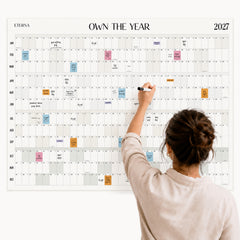
Person planning the year using the Own the Year Wall Calendar

Most people don't fail because they lack goals; they struggle because they can't see the entire year ahead of them.

When appointments, vacations, deadlines, birthdays, projects, and personal goals live across different apps, notebooks, and sticky notes, it's easy to lose perspective. Important dates sneak up, priorities shift, and long-term plans get pushed aside by everyday tasks.

A yearly planning system changes that.

Instead of managing life one week at a time, you begin seeing patterns, busy seasons, opportunities, and potential conflicts months before they happen.

In this blog, you'll learn how to build a practical yearly planning system using the Own the Year Wall Calendar, along with simple accessories that make planning easier, more flexible, and surprisingly enjoyable.

Why Most Planning Systems Eventually Fall Apart

Most people don't struggle with planning because they lack motivation, they struggle because their planning system isn't built for real life.

At the beginning of the year, it's easy to feel optimistic. You buy a new planner, download another productivity app, or promise yourself you'll finally stay on top of your schedule. For a few weeks, everything feels organized. Then life gets busy.

A surprise meeting gets added. A school event changes dates. A vacation needs to be rescheduled. A family member has an appointment. Before long, your carefully planned system becomes scattered across multiple places.

You might have:

  • A digital calendar for work meetings
  • A paper planner for personal goals
  • Sticky notes on your desk
  • A to-do list on your phone
  • Important reminders written on the refrigerator
  • Deadlines buried in your email inbox

Individually, each tool can be helpful. Together, they often create more complexity than clarity.

The Biggest Problem: You Can't See the Big Picture

Most planners are designed around days or weeks. While that's useful for managing daily tasks, it makes long-term planning much harder.

When you only see one week at a time, it's easy to:

  • Double-book important events
  • Forget upcoming deadlines until they're urgent
  • Miss seasonal opportunities
  • Overcommit during busy months
  • Lose sight of long-term goals
  • Underestimate how quickly the year fills up

Without a clear view of the months ahead, you're constantly reacting instead of planning proactively.

Digital Calendars Are Not Always Enough

Digital calendars are excellent for reminders and scheduling appointments, but they're not always ideal for visualizing an entire year.

Opening an app usually shows only a day, a week, or a month at a time. To understand what's happening several months from now, you have to scroll, tap, and switch between views. That extra effort makes it harder to recognize patterns or plan strategically.

A large wall calendar offers something digital tools can't easily replicate: instant visibility. With your entire year displayed in one place, you can quickly spot busy seasons, identify open windows for vacations or projects, and make better decisions without navigating through multiple screens.

Many people find the best approach is a combination of both, a digital calendar for reminders and a visible yearly calendar for long-range planning.

Planning Should Feel Flexible, Not Fragile

Another common reason planning systems fail is that they're difficult to update.

Life changes. Projects get delayed. Travel plans shift. Deadlines move.

If making one change means rewriting multiple pages or starting over, many people simply stop updating their planner altogether.

That's one reason reusable planning tools have become increasingly popular. A dry erase yearly wall calendar lets you adjust your plans as life evolves, helping your planning system stay current without creating extra work.

Build a System You'll Actually Use

The most effective planning system isn't necessarily the most detailed, it's the one you'll consistently come back to.

A yearly planning system should help you:

  • See your entire year at a glance.
  • Keep important dates visible every day.
  • Make updates quickly as plans change.
  • Balance work, family, and personal goals in one place.
  • Stay focused on long-term priorities without losing track of everyday responsibilities.

When your schedule is visible instead of hidden inside multiple apps and notebooks, planning becomes less about remembering everything and more about making confident decisions.

Weekly review of a yearly planning calendar at home

Start with the Right Planning Tool

Even the best planning habits need the right foundation.

Think of your planning system like building a house. Goals, deadlines, and routines are the rooms you'll fill over time, but without a solid foundation, everything becomes harder to manage. That's why choosing the right planning tool is one of the most important decisions you'll make.

The ideal planning tool should do more than simply record appointments. It should help you see your priorities, adapt to changing schedules, and keep your most important commitments visible every day.

For many people, that's exactly where a large yearly wall calendar shines.

Why the Own the Year Wall Calendar Works So Well

A planning system is only useful if you actually use it. The Own the Year Calendar is designed to make that easy by combining simplicity with a full-year view that keeps your plans front and center.

Here are a few features that make it especially practical for long-term planning:

1. See Your Entire Year at Once

Rather than focusing on one month at a time, the calendar displays all 12 months on a single oversized layout.

That means you can:

  • Plan vacations around work deadlines.
  • Coordinate school breaks with family events.
  • Schedule projects months in advance.
  • Balance busy seasons with downtime.
  • Spot scheduling conflicts before they happen.

This bird's-eye view encourages proactive planning instead of constant last-minute adjustments.

2. An Undated Design That Works Every Year

One of the biggest frustrations with traditional calendars is that they're only useful for a single year.

Because the Own the Year Calendar is undated, you choose when it begins. Whether you're planning around a calendar year, school year, fiscal year, or a major life event, the calendar adapts to your schedule, not the other way around.

It also means you can erase it, reset it, and use it again year after year, making it a flexible planning tool that grows with your needs.

3. A Dry Erase Surface Makes Updating Easy

Life rarely follows the original plan.

Meetings get rescheduled. Trips move. Deadlines change. New opportunities come along.

Instead of crossing things out or starting over, a dry erase surface lets you make clean updates whenever plans shift. This flexibility helps keep your calendar accurate and encourages you to keep using it throughout the year.

It's a simple feature, but one that removes a lot of the friction that causes people to abandon their planning systems.

4. Large Enough for the Whole Household or Team

One advantage of a large-format wall calendar is that it doesn't just organize one person, it can become a shared planning hub.

Whether it's displayed in a home office, kitchen, classroom, or workplace, everyone can quickly see upcoming events, important dates, and long-term plans without asking for updates.

It's especially useful for:

  • Families coordinating school activities and vacations
  • Small business owners managing projects and launches
  • Teachers planning the academic year
  • Coaches organizing practices and tournaments
  • Students tracking assignments and exams
  • Remote teams sharing major deadlines

Because the calendar is easy to read from across the room, it naturally becomes part of your daily routine.

Now that you've chosen the right planning tool, it's time to build your system from the ground up by filling in the dates that matter most.

Step 1: Write Down Your Non-Negotiable Dates First

A blank yearly calendar can feel both exciting and overwhelming.

The temptation is to immediately fill it with goals, projects, and ideas for the months ahead. While those are important, the best planning systems begin somewhere much simpler: the dates that aren't going to change.

These are your non-negotiable dates, the commitments that shape your year and influence everything else you plan.

Think of them as the foundation of your calendar. Once they're in place, it becomes much easier to see where you have flexibility and where you'll need to protect your time.

Begin by adding every major event that's already confirmed.

These might include:

  • National and public holidays
  • Family birthdays
  • Anniversaries
  • Weddings
  • School holidays and breaks
  • Parent-teacher conferences
  • Graduation ceremonies
  • Medical and dental appointments
  • Annual checkups
  • Conferences and trade shows
  • Tax deadlines
  • License or membership renewals
  • Planned vacations
  • Religious or cultural celebrations

Don't worry about filling every square. The goal is simply to create a clear picture of the commitments that are already part of your year.

Include Personal Milestones

Some of the most important dates aren't deadlines, they're meaningful moments.

Maybe you're training for your first half marathon, planning a family reunion, celebrating a milestone birthday, or preparing for a new baby. Adding these events early helps ensure they receive the time and attention they deserve.

Don't Forget Annual Responsibilities

It's easy to remember birthdays and vacations, but recurring responsibilities often catch us by surprise.

Consider adding reminders for:

  • Insurance renewals
  • Vehicle maintenance
  • Home maintenance projects
  • Annual physicals
  • Financial planning sessions
  • Subscription renewals
  • Property tax due dates
  • Business reporting deadlines
  • Seasonal home maintenance
  • Gardening or landscaping tasks

Seeing these responsibilities months in advance gives you time to prepare instead of scrambling when they're due.

Keep Your Calendar Clear and Easy to Read

As you add important dates, resist the urge to write long notes inside each calendar block.

Instead, use short labels or simple abbreviations. This keeps your calendar uncluttered and leaves space for future updates.

Many people also find it helpful to use different colors for different types of commitments. For example:

  • Blue for work and business
  • Green for personal goals
  • Orange for family events
  • Purple for travel
  • Red for deadlines and appointments

A simple color-coding system makes your calendar much easier to scan at a glance and helps you quickly distinguish between different areas of your life.

Step 2: Add Your Personal and Professional Goals

With your non-negotiable dates in place, your calendar now has a solid foundation. The next step is to fill the open spaces with something just as important, your goals.

Adding your goals to your calendar helps ensure they don't get lost in the busyness of everyday life.

Choose goals that are meaningful to you, whether they're related to your career, health, finances, relationships, hobbies, or personal growth.

Include Both Professional and Personal Priorities

A balanced yearly plan reflects every area of your life, not just work.

Here are a few ideas to help you get started.

1. Professional Goals

Depending on your career, you might schedule milestones such as:

  • Completing a certification or training program
  • Launching a new product or service
  • Attending conferences or networking events
  • Preparing quarterly reports
  • Reaching sales or revenue targets
  • Updating your resume or portfolio
  • Planning major presentations

Breaking these larger objectives into smaller milestones throughout the year makes them much more manageable.

2. Personal Goals

Your calendar should also make room for the things that improve your quality of life.

Examples include:

  • Reading a certain number of books
  • Training for a 5K, half marathon, or other fitness challenge
  • Saving for a vacation or major purchase
  • Learning a new language or skill
  • Starting a garden
  • Completing a home improvement project
  • Practicing a creative hobby
  • Building healthier daily habits

When these goals are visible alongside your other commitments, they're less likely to be pushed aside.

3. Family Goals

If you're planning with a partner or family, consider adding shared goals as well.

These might include:

  • Family vacations
  • Monthly date nights
  • Children's extracurricular activities
  • Holiday planning
  • Family game nights
  • Volunteer opportunities
  • Home organization projects
  • Annual traditions

Having these plans displayed on a shared wall calendar makes it easier for everyone to stay informed and involved.

Make Your Goals Visible Every Day

One of the greatest strengths of the Own the Year calendar is that your goals don't disappear after you've written them down.

Because the calendar is displayed in a prominent location, you're reminded of your long-term priorities every time you walk by. That constant visibility can make it easier to stay motivated and notice when you're falling behind or making great progress.

Unlike planners that spend most of their time closed on a desk, a wall calendar keeps your goals in sight, making it easier to turn intentions into consistent actions.

Color-coded yearly wall calendar for organizing work and personal life

Step 3: Color-Code Different Areas of Life

As your calendar fills with appointments, deadlines, vacations, goals, and family events, it can quickly become difficult to scan.

That's where color-coding makes a huge difference.

Instead of reading every entry one by one, you can understand your schedule with a quick glance. Colors create visual patterns that help you instantly recognize what's coming up and where your time is being spent.

It's a simple habit, but one that can make your yearly planning system significantly easier to use.

Create a Color System That Makes Sense to You

There's no single "correct" way to color-code a calendar. The best system is one that's simple enough to remember and flexible enough to fit your lifestyle.

Here's one example:

🔵 Blue – Work  and Career

  • Meetings
  • Project deadlines
  • Business travel

🟢 Green – Health and Wellness

  • Exercise goals
  • Medical appointments
  • Fitness milestones

🟠 Orange – Family and Relationships

  • Birthdays
  • Family vacations
  • Date nights

🟣 Purple – Personal Goals

  • Reading goals
  • Learning a new skill
  • Creative projects

🔴 Red – High-Priority Deadlines

  • Renewals
  • Final project deadlines
  • Important appointments

Of course, you can customize these categories to match your own priorities. The key is to stay consistent throughout the year.

Make Color-Coding a Family or Team Habit

If multiple people use the same calendar, consider assigning each person their own color or combining colors with categories.

Choose whichever method makes it easiest for everyone to understand the schedule at a glance.

A shared color system also reduces confusion and helps everyone stay informed without needing constant reminders.

Step 4: Schedule Buffer Time

One of the biggest planning mistakes isn't scheduling too little, it's scheduling too much.

It's easy to assume every project will finish on time, every appointment will run as planned, and every week will unfold exactly as expected. In reality, life has a way of introducing surprises.

A meeting runs long.

A child gets sick.

A flight is delayed.

A project takes an extra week.

An unexpected opportunity appears.

Without room to adjust, even a small change can throw off your entire schedule.

That's why one of the smartest things you can add to your yearly planning system isn't another task, it's buffer time.

What Is Buffer Time?

Buffer time is intentional space left between commitments.

Instead of filling every available day with appointments or projects, you purposely leave room for flexibility.

Think of it as breathing room for your calendar.

It gives you the freedom to adapt without feeling like you're constantly falling behind.

Leave Space Between Major Projects

Avoid scheduling large commitments immediately after one another.

For example, if you're:

  • Launching a new business
  • Moving to a new home
  • Planning a wedding
  • Completing a home renovation
  • Organizing a major event

Give yourself a few days, or even a few weeks, before beginning the next major project.

This extra time allows you to wrap up loose ends, recover mentally, and prepare for what's next instead of jumping straight into another demanding commitment.

Schedule Recovery Time After Busy Seasons

Every year has naturally busy periods.

For some people, it's the holiday season. For others, it's tax season, back-to-school, or the end of a fiscal quarter.

Rather than planning every month at maximum capacity, intentionally schedule quieter periods afterward.

For example:

  • Take a long weekend after completing a major work project.
  • Leave a free weekend after hosting family gatherings.
  • Avoid scheduling another big trip immediately after returning from vacation.
  • Plan lighter weeks following important exams or business launches.

These recovery periods help you recharge and reduce the risk of burnout.

Step 5: Review Your Calendar Every Week

Creating a yearly planning system is a great first step, but keeping it updated is what makes it truly effective.

Think of your wall calendar as a living plan rather than a finished document. Throughout the year, new opportunities will arise, priorities will shift, and unexpected events will happen. A regular weekly review helps you stay in control instead of constantly reacting to changes.

The good news? It doesn't take long.

In fact, spending just 10 to 15 minutes once a week can save you hours of stress and last-minute scrambling later.

Accessories That Make Yearly Planning Even Easier

A great planning system isn't just about having the right calendar, it's also about having the right tools to make using it effortless.

Once you've established the habit of reviewing and updating your calendar each week, you'll quickly notice that a few well-chosen accessories can make planning faster, cleaner, and more enjoyable.

You don't need dozens of organizational gadgets. In fact, a handful of practical planning essentials is often all it takes to keep your yearly planning system running smoothly.

1. Colorful Dry Erase Markers Make Your Calendar Easier to Read

If you've been color-coding different areas of your life, quality dry erase markers are one of the most valuable accessories you can own.

Using multiple colors helps you quickly distinguish between:

  • Work projects
  • Family events
  • Personal goals
  • Travel plans
  • Health appointments
  • Financial deadlines

Instead of reading every note individually, you can understand your schedule at a glance.

Choose markers with fine or medium tips that write clearly without taking up too much space in each calendar box. Bright, easy-to-read colors also make your calendar more inviting to use throughout the year.

2. Keep an Eraser Within Reach

A yearly planning system is designed to evolve.

Plans change, deadlines move, and new opportunities appear. Having a dedicated dry erase eraser nearby makes it easy to keep your calendar clean without leaving behind smudges or ghosting.

Rather than crossing out outdated information, you can simply erase it and rewrite your plans, keeping your calendar neat and professional-looking from January through December.

3. Use a Microfiber Cloth for a Fresh Start

Even with a quality eraser, your calendar will occasionally benefit from a more thorough cleaning.

A soft microfiber cloth helps remove marker residue and keeps the writing surface looking bright and easy to read.

Giving your calendar a quick wipe every few weeks, or whenever you reset for a new planning cycle, helps maintain a clean workspace and extends the life of your dry erase surface.

4. Keep Your Planning Tools Together

Have you ever needed to update your calendar, only to spend several minutes searching for a marker?

Small interruptions like that make it easier to put off planning altogether.

Keeping your markers, eraser, and cleaning cloth together in one convenient place encourages you to make updates as soon as plans change.

Whether you use a marker holder, storage tray, or small desktop organizer, having everything within easy reach makes your planning routine feel effortless.

Match Your Accessories to Your Planning Style

Everyone organizes differently, so choose accessories that fit the way you naturally plan.

For example:

Busy Families

  • Multiple marker colors for each family member
  • Easy-access eraser
  • Storage for frequently used supplies

Professionals

  • Fine-tip markers for detailed schedules
  • Neutral colors for project planning
  • Quick-clean eraser for frequent updates

Teachers and Students

  • Bright colors for assignments, exams, and school events
  • Extra markers for classroom use
  • Cleaning cloth for regular maintenance

Small Business Owners

  • Color-coded project tracking
  • Marketing campaign planning
  • Client deadline organization

The goal isn't to own more accessories, it's to choose the ones that make planning easier and more consistent.

One of the biggest advantages of the Own the Year calendar is that it's designed to be reused year after year. Pairing it with quality accessories helps you get even more value from it.

With the right tools, updating your schedule becomes a quick, satisfying task instead of something you avoid. Over time, those small improvements make it easier to stay organized, reduce stress, and keep your long-term goals in focus.

Creative Ways to Use an Own the Year Wall Calendar

One of the best things about the Own the Year calendar is its versatility.

While it's an excellent tool for keeping track of appointments and deadlines, its large, reusable format makes it useful for so much more. Once you start thinking beyond a traditional calendar, you'll discover dozens of ways it can help you stay organized, motivated, and focused throughout the year.

Whether you're managing a busy household, running a business, or working toward a personal goal, your calendar can become the visual hub for everything that matters most.

Here are a few creative ways to make the most of it.

1. Create a Family Command Center

Families often juggle multiple schedules at once.

Between school events, extracurricular activities, work commitments, birthdays, vacations, and appointments, it's easy for something to slip through the cracks.

A large wall calendar placed in a shared space, such as the kitchen, hallway, or family room, gives everyone a clear view of what's happening throughout the year.

2. Plan Business Projects and Product Launches

If you're a small business owner, entrepreneur, or freelancer, your wall calendar can become a high-level business planning board.

Use it to map out:

  • Product launches
  • Marketing campaigns
  • Seasonal promotions
  • Trade shows and conferences
  • Content publishing schedules
  • Sales goals
  • Quarterly planning sessions
  • Team milestones

Seeing your entire business year on one calendar helps you balance workloads, avoid overlapping projects, and prepare for busy seasons well in advance.

3. Organize the School Year

Students, teachers, and parents can all benefit from seeing the academic year in one place.

Track important dates such as:

  • First and last days of school
  • Holidays and school breaks
  • Parent-teacher conferences
  • Assignment due dates
  • Midterm and final exams
  • Sports seasons
  • School performances
  • Graduation events

Instead of reacting to upcoming deadlines, you'll have plenty of time to prepare.

4. Build a Fitness and Wellness Roadmap

Health goals are much easier to maintain when your progress is visible.

Your yearly wall calendar can help you plan:

  • Workout programs
  • Running races
  • Strength training cycles
  • Rest weeks
  • Wellness challenges

Rather than focusing only on daily workouts, you'll be able to see how each month contributes to your long-term health goals.

5. Plan Your Dream Vacation

Vacations involve much more than booking flights.

Use your calendar to schedule every stage of the planning process, including:

  • Destination research
  • Budget planning
  • Booking flights
  • Reserving accommodations
  • Passport renewals
  • Packing reminders
  • Activity reservations

By spreading these tasks across several months, you can reduce stress and enjoy the excitement leading up to your trip.

6. Track Home Improvement Projects

Home projects often take longer than expected because they're planned without a clear timeline.

Instead of tackling everything at once, use your wall calendar to organize projects throughout the year.

Examples include:

  • Spring landscaping
  • Interior painting
  • Kitchen renovations
  • Decluttering projects
  • Seasonal maintenance
  • Appliance replacements
  • Holiday decorating

Breaking larger projects into phases helps make them feel much more manageable.

7. Manage Your Content Calendar

For bloggers, creators, marketers, and social media managers, consistency is everything.

A yearly wall calendar provides a bird's-eye view of your content strategy.

You can schedule:

  • Blog posts
  • Email newsletters
  • Social media campaigns
  • Product launches
  • Holiday promotions
  • Video production
  • Photography sessions
  • Collaboration deadlines

Seeing your content across the entire year makes it easier to maintain a consistent publishing schedule and avoid last-minute scrambling.

8. Keep Track of Financial Goals

Financial planning doesn't have to happen only at tax time.

Your calendar can help you stay on top of:

  • Monthly savings goals
  • Investment reviews
  • Bill reminders
  • Insurance renewals
  • Tax deadlines
  • Debt repayment milestones
  • Annual budgeting sessions
  • Major purchases

Seeing these milestones throughout the year encourages consistent progress instead of rushed financial decisions.

9. Turn Your Calendar Into a Goal Tracker

Your Own the Year calendar doesn't have to be limited to appointments.

Use it to visually track progress toward meaningful goals.

For example:

  • Mark every completed workout.
  • Highlight each finished book.
  • Record monthly savings milestones.
  • Celebrate project completions.
  • Track habit streaks.
  • Note personal achievements.

Watching your progress accumulate throughout the year can be incredibly motivating and serves as a reminder of how much you've accomplished.

Conclusion

Creating a yearly planning system is not about filling every day with tasks or striving for a perfectly organized schedule. It's about gaining a clear view of your time so you can make thoughtful decisions, stay focused on your priorities, and create space for the people and goals that matter most.

By starting with your non-negotiable dates, adding meaningful goals, color-coding different areas of your life, breaking big projects into monthly milestones, scheduling buffer time, and reviewing your calendar each week, you've built a planning system that's both practical and flexible. Rather than reacting to last-minute deadlines or unexpected conflicts, you'll be able to approach each month with greater confidence and clarity.

The Own the Year Calendar makes this process even easier by giving you a full-year view that's always visible. Its large format, reusable dry erase surface, and undated design help you adapt your plans as life changes, whether you're organizing family schedules, managing work projects, planning school activities, or working toward personal goals.

And when you pair your calendar with the right planning tools, staying organized becomes even more effortless. Colorful dry erase markers, quality erasers, and other practical accessories help keep your calendar clean, easy to read, and simple to update throughout the year.

Ready to Own Your Year?

If you're ready to move beyond scattered notes, multiple planners, and last-minute scheduling, now is the perfect time to create a planning system that works for your lifestyle.

Explore the Own the Year Calendars to start planning your year with confidence, then complete your setup with the Eterna Goods Accessories Collection to make organizing, updating, and tracking your goals even easier.

When you can see the entire year in front of you, every month becomes an opportunity to make steady progress, celebrate meaningful milestones, and truly own your year.

Â