




How to Use a Flat Desk Calendar to Organize Your Entire Year

Undated 12-Month Flat Desk Calendar

Staying organized sounds simple in theory, but in reality, it can feel overwhelming. Between work deadlines, family commitments, appointments, school events, and personal goals, it's easy to lose track of important dates and responsibilities. While digital calendars and reminder apps certainly have their place, many people still struggle to see the bigger picture of their schedule.

That's where a flat desk calendar can make a surprising difference.

Unlike small planners or crowded phone screens, a flat desk calendar gives you a clear, visual overview of your weeks and months. With everything laid out in front of you, it's easier to plan ahead, stay focused on priorities, and avoid last-minute surprises.

Whether you're a student trying to manage assignments, a professional juggling projects, or a parent coordinating family activities, a flat desk calendar can become your central planning tool for the entire year.

In this blog, you'll learn practical ways to use a flat desk calendar to organize your schedule, achieve your goals, and create a planning system that actually works.

What Is a Flat Desk Calendar?

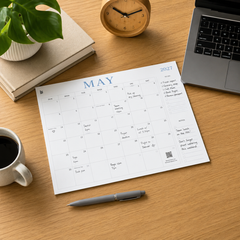
A flat desk calendar is a large-format calendar designed to sit directly on your desk, table, or workspace. Unlike traditional planners that require flipping pages or digital calendars hidden behind apps and notifications, a flat desk calendar keeps your schedule visible at all times.

Most flat desk calendars feature spacious monthly layouts with plenty of room for writing appointments, deadlines, reminders, and personal notes. Because the entire month is displayed at a glance, they make long-term planning significantly easier.

2026-2027 18-Month Flat Desk Calendar

Key Features of a Flat Desk Calendar

Not all calendars are created equal. The best flat desk calendars share several important features that make planning easier and more effective.

1. Large Writing Spaces

One of the biggest advantages of a flat desk calendar is the amount of room available for writing. Whether you're tracking meetings, assignment deadlines, family events, or project milestones, larger date boxes give you the flexibility to add meaningful details without creating clutter.

This extra space is especially valuable for people who prefer writing complete reminders rather than relying on shorthand notes.

2. Monthly Overview at a Glance

A flat desk calendar allows you to see your entire month on a single page. Instead of viewing only today's schedule, you can quickly identify:

  • Upcoming deadlines
  • Busy periods
  • Vacations and holidays
  • Long-term projects
  • Goal milestones

This broader perspective helps prevent scheduling conflicts and encourages better time management.

3. Easy Accessibility

Because the calendar sits directly on your workspace, it remains within sight throughout the day. You don't have to search through apps, unlock devices, or flip through planner pages to check your schedule.

The simple act of keeping your plans visible often increases follow-through and accountability.

4. Flexible Planning Tool

A flat desk calendar can be used for far more than appointments. Many people use theirs to track:

  • School assignments
  • Work projects
  • Fitness goals
  • Budgeting deadlines
  • Content creation schedules
  • Family activities
  • Travel plans
  • Habit-building challenges

This versatility makes it one of the most practical planning tools available.

Who Uses Flat Desk Calendars?

Flat desk calendars are popular among a wide range of people because they adapt easily to different lifestyles and planning needs.

1. Students

Students use flat desk calendars to keep track of:

  • Assignment due dates
  • Exam schedules
  • Extracurricular activities
  • Study plans
  • Academic goals

Seeing important dates laid out visually helps reduce last-minute cramming and missed deadlines.

2. Teachers and Educators

Teachers often manage dozens of responsibilities at once. A flat desk calendar can help organize:

  • Lesson plans
  • Parent conferences
  • School events
  • Grading schedules
  • Professional development activities

Having a monthly overview makes long-term academic planning much easier.

3. Professionals

Busy professionals frequently use flat desk calendars to coordinate:

  • Meetings
  • Project deadlines
  • Business travel
  • Quarterly goals
  • Client deliverables

The ability to view upcoming commitments at a glance can improve productivity and reduce scheduling stress.

4. Parents and Families

For families, a flat desk calendar often serves as a central command center where everyone can stay informed about:

  • School activities
  • Sports practices
  • Doctor appointments
  • Family gatherings
  • Household responsibilities

When schedules are visible, communication becomes easier and fewer events slip through the cracks.

How a Flat Desk Calendar Differs From Other Planning Tools

1. Flat Desk Calendar vs. Wall Calendar

Wall calendars are useful for displaying dates, but they aren't always convenient when you're actively planning your day. A flat desk calendar sits within arm's reach, making it easy to update, review, and reference throughout the day.

2. Flat Desk Calendar vs. Digital Calendars

Digital calendars offer convenience, but they also come with distractions. Notifications, emails, social media, and other apps can quickly pull your attention away from planning.

A flat desk calendar creates a dedicated space for organization without the constant interruptions of a screen. Many people also find that physically writing down appointments and goals helps them remember information more effectively.

3. Flat Desk Calendar vs. Traditional Planners

Traditional planners are excellent for detailed daily scheduling, but they often make it difficult to see your entire month at once. A flat desk calendar provides a broader perspective, helping you spot scheduling conflicts, busy periods, and upcoming deadlines before they become problems.

Why Visual Planning Works

One of the biggest advantages of using a flat desk calendar is visibility.

When your schedule is always in sight, you're naturally reminded of important commitments and goals. Instead of reacting to events as they happen, you can proactively plan your time and make better decisions.

Visual planning also makes it easier to:

  • Track important deadlines
  • Balance work and personal commitments
  • Monitor long-term projects
  • Stay focused on annual goals
  • Reduce scheduling conflicts

Simply put, seeing your entire month laid out in front of you helps transform planning from a stressful task into a manageable habit.

Why Physical Calendars Are Still Popular

In today's digital world, some people assume that physical calendars have become outdated. In reality, many highly productive individuals continue to rely on them.

Research has shown that writing information by hand can improve memory retention and increase engagement with the material. When you physically write down a deadline or goal, you're more likely to remember it and take action.

Physical calendars also eliminate many of the distractions associated with digital devices. Instead of opening a calendar app and immediately being interrupted by emails, messages, or social media notifications, a flat desk calendar keeps your focus on planning.

Perhaps most importantly, physical calendars provide a constant visual reminder of what matters most. Every time you sit down at your desk, your priorities are right in front of you.

2026-2027 18-Month Flat Desk Calendar

How to Use Your Flat Desk Calendar

Step 1: Start with Your Major Annual Commitments

The biggest mistake many people make when setting up a calendar is filling in small tasks before accounting for the major events that shape their year.

Think of your annual commitments as the foundation of your schedule. These are the dates and responsibilities that are already fixed or highly predictable. By adding them first, you create a realistic framework that makes the rest of your planning easier and more accurate.

Before you start scheduling goals, projects, or personal activities, take a few minutes to identify the key events that will impact your year.

Why Annual Commitments Should Come First

Imagine planning a vacation only to discover it overlaps with an important work conference. Or committing to a major project without realizing you already have several busy weeks ahead.

When you begin with your major commitments, you gain a clear picture of your available time and can plan more effectively around existing obligations.

This approach helps you:

  • Avoid scheduling conflicts
  • Prevent overcommitting yourself
  • Identify busy seasons in advance
  • Allocate time for important goals
  • Reduce last-minute surprises

A flat desk calendar is especially useful for this step because you can view entire months at a glance and immediately spot patterns in your schedule.

Identify Your Fixed Dates

Start by gathering any information that includes confirmed dates for the year. Depending on your lifestyle, this may include:

  • Work Commitments
  • School and Academic Schedules
  • Family Events
  • Travel Plans and Vacations
  • Financial Deadlines

Create Categories for Better Organization

Once you've added your major commitments, consider creating simple categories to make your calendar easier to read.

A color-coding system works well for many people.

For example:

  • Blue for work
  • Green for personal goals
  • Red for deadlines
  • Purple for family events
  • Orange for finances

The goal isn't to create a complicated system. Instead, use just enough visual organization to quickly identify different types of commitments.

When you glance at your calendar, you should immediately understand where your time is being allocated.

Step 2: Break Big Goals Into Monthly Milestones

Once your major annual commitments are mapped out, it's time to focus on something equally important: your goals.

Most people start the year with good intentions. They want to save more money, improve their health, grow their business, earn better grades, or finally complete a project they've been putting off. Yet many of these goals never make it past the planning stage.

The problem usually isn't a lack of motivation, it's a lack of structure.

Big goals can feel overwhelming when viewed as one large task. A flat desk calendar helps solve this problem by allowing you to break ambitious goals into smaller, manageable milestones that fit naturally into your monthly schedule.

Schedule Milestones Directly on Your Calendar

One of the advantages of a flat desk calendar is that you can see both your goals and your commitments in the same place.

As you create milestones, write them directly on the calendar.

Examples include:

  • Project checkpoints
  • Savings targets
  • Study deadlines
  • Fitness benchmarks
  • Business objectives

This keeps your goals visible and prevents them from becoming an afterthought.

When you regularly see your milestones, you're more likely to stay focused and take action.

Step 3: Use Color Coding for Instant Clarity

Now that you've added your major commitments and mapped out your monthly goals, it's time to make your calendar even more powerful.

Why Color Coding Works

Your brain processes colors faster than text.

When you assign specific colors to different types of activities, you create visual patterns that make planning easier.

For example, imagine looking at your calendar and immediately noticing:

  • A week filled with red deadlines
  • A month packed with blue work commitments
  • Several green personal goals approaching

Without reading a single note, you already have a clear understanding of what your schedule looks like.

Create a Simple Color System

The key to successful color coding is simplicity.

You don't need ten different colors or a complicated legend. In fact, too many categories can make your calendar harder to use.

Start with four or five major categories that reflect your lifestyle.

For example:

  • Blue: Work and Professional Responsibilitie
  • Green: Personal Goals and Self-Improvement
  • Red: Important Deadlines
  • Purple: Family and Social Events
  • Orange: Financial Tasks

Step 4: Schedule Monthly Reviews

Creating a well-organized calendar is a great start, but staying organized requires something many people overlook: regular review.

Think of your flat desk calendar as a roadmap. Even the best roadmap becomes less useful if you never stop to check your progress, adjust your route, or prepare for what's ahead.

That's why monthly reviews are one of the most powerful habits you can build.

A monthly review gives you an opportunity to look back at what you've accomplished, identify potential challenges, and make adjustments before small problems become major setbacks. Best of all, it doesn't take much time. In most cases, 15 to 20 minutes at the end of each month is enough to keep your entire planning system running smoothly.

Step 5: Create Planning Zones on Your Calendar

Planning zones are dedicated areas of focus that help you manage different parts of your life without feeling overwhelmed. Instead of viewing your calendar as a collection of unrelated dates, you'll begin to see it as a complete planning system.

This approach is especially effective for busy individuals who are balancing work, school, family responsibilities, finances, and personal goals all at the same time.

What Are Planning Zones?

Planning zones are categories or sections that help organize the information on your calendar.

Think of them as mental compartments that allow you to quickly answer questions such as:

  • What goals am I working toward this month?
  • Which deadlines are approaching?
  • What family events are coming up?
  • What financial tasks need attention?
  • What projects require progress this week?

While every person's planning zones will look slightly different, the goal is the same: create a calendar that gives you a clear overview of the areas that matter most.

Step 6: Use Your Calendar for Project Planning

Most projects don't fail because people lack motivation. They fail because important tasks aren't properly planned.

Whether you're managing a work assignment, preparing for an exam, launching a business initiative, organizing a family event, or tackling a home improvement project, success often comes down to one thing: breaking the project into manageable steps and scheduling those steps in advance.

This is where a flat desk calendar becomes incredibly valuable.

Instead of keeping project details scattered across notes, emails, and to-do lists, you can use your calendar to create a clear roadmap from start to finish.

Why Project Planning Matters

Large projects can feel overwhelming when viewed as a single task.

For example:

  • "Launch a website"
  • "Write a research paper"
  • "Plan a wedding"
  • "Renovate a kitchen"
  • "Organize a fundraising event"

Step 7: Keep Your Calendar Visible Every Day

You've mapped out your major commitments, broken goals into monthly milestones, created planning zones, and organized projects. Now comes the step that determines whether your planning system succeeds or fails:

Keep your calendar visible.

This may sound obvious, but it's one of the most important habits you can develop. Even the most thoughtfully organized calendar won't help if it's tucked away in a drawer, buried under paperwork, or only checked occasionally.

The power of a flat desk calendar comes from its visibility. When your plans remain in sight, they stay top of mind. You don't have to rely on memory or wait for reminders—you naturally stay connected to your priorities throughout the day.

Why Visibility Matters

Many organization systems fail because they're too easy to ignore.

A planner hidden in a backpack or an app buried among dozens of phone icons often gets forgotten until something urgent happens.

A flat desk calendar works differently.

Because it's always visible, it serves as a constant visual reminder of:

  • Upcoming deadlines
  • Important appointments
  • Monthly goals
  • Project milestones
  • Family commitments
  • Financial responsibilities

Each time you sit down at your desk, you're reminded of what matters most.

This simple exposure can significantly improve follow-through and accountability.

Choose the Right Location

To get the most value from your calendar, place it somewhere you'll naturally see multiple times each day.

Ideal locations include:

  • Home Office Desk
  • Student Study Area
  • Family Command Center
  • Small Business Workspace

Conclusion: Take Control of Your Year, One Month at a Time

Getting organized doesn't require a complicated productivity system or dozens of apps. Often, the most effective solution is also the simplest.

A flat desk calendar gives you a clear, visual way to manage your schedule, track your goals, plan important projects, and stay ahead of deadlines throughout the year. By recording major commitments, breaking goals into monthly milestones, using color coding, conducting regular reviews, and keeping your calendar visible every day, you create a planning system that helps you stay focused and in control.

The beauty of a flat desk calendar is that it allows you to see the bigger picture without losing sight of the small details. Instead of constantly reacting to what's next, you can proactively plan your time and make intentional decisions that support your goals.

Remember, organization isn't about filling every hour of your day. It's about creating clarity, reducing stress, and making space for the things that matter most.

Ready to Organize Your Entire Year?

If you're ready to stop juggling scattered notes, missed deadlines, and forgotten goals, a well-designed flat desk calendar can help you bring everything together in one place.

Our flat desk calendars are designed with spacious writing areas, easy-to-read monthly layouts, and plenty of room for planning your work, school, family, and personal goals. Whether you're a student, teacher, professional, parent, or small business owner, you'll have the space you need to stay organized all year long.

Explore our collection of flat desk calendars today and start building a clearer, more organized year, one month, one goal, and one success at a time.


Â