




Staying organized can feel like a full-time job. Between work deadlines, school schedules, family commitments, appointments, and personal goals, it's easy for important dates to slip through the cracks. While digital calendars and reminder apps are convenient, they don't always provide the clear, big-picture view many people need to stay on top of everything.
That's where an 18-month lay flat desk calendar makes a real difference. Unlike a standard calendar, it gives you a longer planning horizon and a spacious monthly layout that stays open and ready whenever you need it. Whether you're managing a busy office, coordinating family activities, teaching a classroom, or planning an academic year, having your schedule visible at a glance can make daily planning feel simpler and less stressful.
In this blog, we'll explore what makes an 18-month layf flat desk calendar such a practical planning tool, who benefits most from using one, and how it can help you stay organized all year long. By the end, you'll have a better understanding of why this simple addition to your workspace can become one of your most valuable productivity tools.
Why Staying Organized Is Harder Than Ever
Life doesn't slow down, it gets busier. Most of us are juggling more responsibilities than ever before, often switching between work, home, school, and personal commitments throughout the day. Keeping track of everything can feel overwhelming, especially when your schedule is spread across multiple apps, sticky notes, emails, and mental reminders.
A typical week might include:
- Project deadlines and team meetings
- School assignments and extracurricular activities
- Medical appointments
- Bill payment due dates
- Birthdays and family celebrations
- Travel plans
- Household chores
- Personal goals like exercising or meal planning
With so many moving parts, it's no surprise that things occasionally get forgotten.
Why Digital Planning Isn't Always Enough
Digital calendars are excellent for sending reminders and syncing schedules across devices, but they aren't always the best tool for long-term planning. Important events can get buried beneath dozens of notifications, and constantly switching between apps or scrolling through a small phone screen makes it harder to see how everything fits together.
Many people also experience what's known as "notification fatigue." When your phone constantly buzzes with emails, messages, and app alerts, even important calendar reminders can become easy to ignore.
Another challenge is visibility. Unless you intentionally open your calendar app, your schedule stays hidden. That means upcoming deadlines, important appointments, or long-term goals can easily slip out of mind during a busy day.
The Power of Seeing Your Plans Every Day
This is one reason paper planning has remained popular despite advances in technology. A desk calendar doesn't compete with social media notifications or incoming emails. Instead, it sits in plain sight, quietly reminding you of what's ahead every time you sit down to work.
Seeing your entire month displayed in front of you makes it easier to:
- Spot scheduling conflicts before they happen
- Plan projects and deadlines more effectively
- Keep important dates at the top of mind
- Balance work, family, and personal commitments
- Think ahead instead of reacting at the last minute
For many people, this simple visual overview reduces stress because it creates clarity. Instead of wondering what's coming next, you can see your month unfold at a glance and make better decisions about how to use your time.
What Is an 18-Month Lay Flat Desk Calendar?
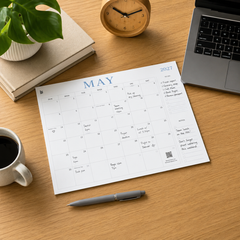
An 18-month lay flat desk calendar is a large-format monthly planner designed to help you organize your schedule over a year and a half. Instead of covering the traditional 12 months, it provides 18 consecutive months of planning, giving you extra time to map out future events, projects, and goals without needing to replace your calendar as often.
Unlike planners with daily or weekly pages, a desk calendar displays an entire month at a glance. Each date typically includes a generous writing space, making it easy to record appointments, deadlines, reminders, birthdays, and important events. Because it sits directly on your desk, it's always within view, encouraging you to stay organized every time you begin your workday.
Whether you're managing a busy office, coordinating a household, planning an academic year, or running a small business, an 18-month desk calendar provides the long-term visibility that many digital calendars simply can't match.
What Does "Lay Flat" Mean?
One of the standout features of this type of calendar is its lay flat design. As the name suggests, the calendar opens completely flat on your desk instead of curling upward or closing on its own.
This simple feature offers several everyday benefits:
- Write comfortably from edge to edge. A flat surface makes it easier to jot down notes anywhere on the page.
- Keep your schedule fully visible. You won't have to hold the pages open while reviewing your plans.
- Enjoy a cleaner workspace. Flat pages stay neat and organized without folded corners or lifted edges.
- Review your month more easily. Seeing every date clearly helps you spot conflicts, busy weeks, and open availability.
It may seem like a small design detail, but anyone who writes on a calendar regularly will appreciate how much more convenient a lay flat format feels compared to calendars that constantly shift or curl.
Why Choose an 18-Month Calendar Instead of a Standard One?
Most calendars only cover a single year, which means replacing them annually. An 18-month calendar gives you six additional months of planning, making it especially useful for people whose schedules naturally extend beyond the calendar year.
For example, you can:
- Plan an entire school year without interruption.
- Schedule long-term work projects and milestones.
- Keep track of annual memberships and subscription renewals.
- Organize vacations and holiday plans well in advance.
- Prepare for weddings, home renovations, or other major life events.
- Set long-term financial or personal goals and monitor your progress.
Having those extra months already available allows you to think beyond immediate deadlines and create a more proactive planning system.
Why an 18-Month Calendar Beats a Standard 12-Month Calendar
At first glance, a 12-month calendar and an 18-month calendar might seem nearly identical. Both help you keep track of appointments, deadlines, and important dates. The real difference lies in how far ahead you can plan, and for many people, those extra six months make a noticeable difference.
If you've ever found yourself buying a new calendar while you're still planning events for the following year, you already understand the limitation of a standard 12-month format. An 18-month lay flat desk calendar eliminates that gap, allowing you to organize future plans without interruption.
Side-by-Side Comparison
|
Standard 12-Month Calendar |
18-Month Lay Flat Desk Calendar |
|
Covers one calendar year |
Covers a full 18 months of planning |
|
Needs replacing sooner |
Lasts longer before replacement |
|
Limited space for long-term planning |
Ideal for planning well into the following year |
|
Best for short-term schedules |
Excellent for long-term projects and goals |
|
May interrupt academic or fiscal planning |
Easily spans school years, business cycles, and major life events |
Â
Benefits of a Lay Flat Desk Calendar
A calendar's design can have a bigger impact on your daily routine than you might think. While most calendars serve the same basic purpose, helping you keep track of important dates, not all of them are equally easy to use.
A lay flat desk calendar is designed with everyday convenience in mind. By staying open and flat on your desk, it makes planning, reviewing, and updating your schedule effortless. Combined with an 18-month layout, it becomes more than just a calendar, it becomes a dependable planning hub for your home, office, or classroom.
Here are some of the biggest benefits of choosing a lay flat desk calendar.
1. See Your Entire Month at a Glance
One of the greatest advantages of a desk calendar is its ability to give you a complete overview of your month. Instead of flipping through weekly pages or scrolling through a digital app, you can instantly see what's coming up.
This bird's-eye view makes it easier to:
- Identify busy weeks before they become overwhelming
- Avoid scheduling conflicts
- Balance work, personal, and family commitments
- Plan ahead for holidays, travel, and special events
- Spot open days for new appointments or projects
Seeing your schedule laid out visually helps you make better decisions about how to manage your time.
2. Enjoy Spacious Writing Areas
Tiny calendar boxes can quickly become crowded, making it difficult to read your own notes. A quality lay flat desk calendar typically features large daily blocks that provide plenty of room to write clearly.
Use the extra space to record:
- Meetings and appointments
- Project deadlines
- School assignments
- Birthdays and anniversaries
- Bill payment reminders
- Meal plans
- Fitness goals
-
Personal to-do lists
Having enough room to write comfortably means you can include meaningful details without cluttering your calendar.
3. The Lay Flat Design Makes Planning Easier
Unlike calendars that curl, shift, or close while you're writing, a lay flat calendar stays exactly where you need it.
This thoughtful design offers several practical advantages:
- Write smoothly across the entire page.
- Review your schedule without holding pages down.
- Keep your calendar neat and wrinkle-free.
- Update plans quickly throughout the day.
It may seem like a small feature, but if you reference your calendar often, the added convenience makes everyday planning much more enjoyable.
4. Keep Important Dates in Plain Sight
One reason paper calendars remain so popular is their visibility. Because a desk calendar sits directly in your workspace, your schedule is always within view.
This constant visual reminder helps you stay mindful of upcoming priorities without relying solely on digital alerts.
Keeping your calendar visible can help you remember:
- Upcoming meetings
- Due dates
- Family commitments
- Monthly goals
- Important deadlines
- Special occasions
Sometimes simply seeing your plans every day is enough to help you stay on track.
5. Reduce Mental Clutter
Trying to remember dozens of appointments and deadlines uses valuable mental energy. Writing them down frees your mind to focus on the task at hand instead of worrying about what you might forget.
Many people find that maintaining a physical calendar helps reduce stress because everything is organized in one trusted place.
Instead of thinking:
"Don't forget that appointment next Thursday..."
You can confidently look at your calendar and know it's already taken care of.
6. Support Better Daily Habits
A desk calendar isn't only for scheduling appointments, it can also become a simple habit tracker.
Many people use their calendars to monitor:
- Exercise routines
- Water intake
- Reading goals
- Study sessions
- Budget check-ins
- Gardening schedules
- Household chores
- Self-care activities
Seeing these habits throughout the month makes it easier to recognize patterns and celebrate your progress.
7. Works Alongside Your Digital Calendar
Choosing a paper calendar doesn't mean giving up digital tools. In fact, many organized people use both together.
A practical approach is to:
- Use your phone for reminders and notifications.
- Use your desk calendar for monthly planning and long-term visibility.
This combination gives you the convenience of technology while preserving the clarity and focus that comes from seeing your entire schedule at a glance.
Who Benefits Most from an 18-Month Desk Calendar?
One of the best things about an 18-month lay flat desk calendar is its versatility. While everyone's schedule looks a little different, most people share the same goal: staying organized without making planning more complicated.
Whether you're managing deadlines at work, keeping track of family activities, or planning an academic year, having a large monthly calendar within easy reach can help you stay ahead instead of constantly playing catch-up.
Here are some of the people who can benefit the most from using an 18-month desk calendar.
1. Busy Professionals
Workdays can quickly fill up with meetings, project deadlines, presentations, and client appointments. When everything competes for your attention, it's easy to overlook important dates.
An 18-month desk calendar helps professionals:
- Schedule meetings and deadlines months in advance
- Visualize project timelines
- Plan business trips and conferences
- Track recurring appointments
- Organize quarterly and annual goals
Keeping your calendar visible throughout the day also serves as a gentle reminder of your priorities, helping you stay focused and organized.
2. Students
From the first day of classes to final exams, students juggle countless responsibilities throughout the school year. Since an academic year often extends beyond a standard calendar year, an 18-month calendar is especially useful.
Students can use it to keep track of:
- Assignment due dates
- Exam schedules
- Class registration deadlines
- Study plans
- Campus events
- Semester breaks
-
Graduation milestones
Seeing the entire month laid out makes it easier to balance coursework, extracurricular activities, part-time jobs, and personal commitments.
3. Teachers and Educators
Teachers often plan weeks ahead. Lesson plans, grading schedules, parent-teacher conferences, and school events all require careful organization.
A spacious desk calendar can help educators:
- Map out lesson plans
- Track grading deadlines
- Schedule parent meetings
- Plan school holidays and testing periods
- Organize classroom events
Since many school calendars span more than one calendar year, the additional six months of planning can be especially valuable.
4. Parents and Families
Managing a household often means coordinating several schedules at once. Between school activities, sports practices, medical appointments, birthdays, vacations, and family events, there's a lot to remember.
An 18-month lay flat desk calendar provides one central place where parents can organize everything.
Use it to track:
- Children's school activities
- Family appointments
- Extracurricular schedules
- Vacation plans
- Birthdays and anniversaries
- Bill due dates
- Household projects
Having everyone's important dates in one visible location can reduce scheduling conflicts and help the entire family stay on the same page.
5. Small Business Owners
Running a business requires balancing many responsibilities at once. A monthly desk calendar provides an easy way to monitor important dates without constantly switching between digital tools.
Business owners often use desk calendars to organize:
- Marketing campaigns
- Product launches
- Inventory orders
- Payroll dates
- Tax deadlines
- Vendor appointments
- Customer meetings
- Business goals
Long-term planning is particularly important for growing businesses, making an 18-month calendar a practical investment.
6. Remote Workers and Home Offices
Working from home comes with unique challenges. Without a traditional office environment, it's easy for work tasks and personal responsibilities to overlap.
A desk calendar creates a dedicated planning space that helps you:
- Separate work and personal commitments
- Keep meetings visible throughout the day
- Stay focused on priorities
- Build a consistent planning routine
Placed next to your computer, it becomes a simple but effective productivity tool that supports better time management.
7. Anyone Who Likes to Plan Ahead
You don't need a demanding career or a packed family schedule to appreciate the benefits of an 18-month calendar.
If you're someone who enjoys setting goals, organizing future events, or simply feeling prepared, you'll likely appreciate the extra planning time.
Many people use their calendars to plan:
- Vacations
- Home improvement projects
- Financial goals
- Fitness challenges
- Holiday shopping
- Gardening schedules
- Volunteer activities
- Personal milestones
The additional six months give you the flexibility to think beyond today and prepare for what's next.

Tips for Getting the Most Out of Your Desk Calendar
Buying an 18-month lay flat desk calendar is a great first step toward staying organized, but the real value comes from how you use it. A few simple habits can turn your calendar from a place to jot down dates into a reliable planning system that helps you stay on top of your responsibilities all year long.
Whether you're using your calendar for work, school, family life, or personal goals, these practical tips will help you get the most out of every month.
1. Add Important Dates as Soon as You Know Them
Don't wait until the last minute to fill in your calendar. Whenever you schedule an appointment or learn about an upcoming event, write it down right away.
Include dates such as:
- Medical and dental appointments
- Work meetings
- School events
- Birthdays and anniversaries
- Bill due dates
- Vacation plans
- Renewal dates for subscriptions or memberships
- Holidays and family gatherings
Recording dates immediately reduces the chance of forgetting something important and keeps your schedule accurate.
2. Use Color-Coding to Stay Organized
Color-coding is one of the easiest ways to make your calendar easier to read. Assign a different color to each area of your life so you can quickly identify what your month looks like.
For example:
- Blue for work and business
- Green for personal appointments
- Red for deadlines
- Purple for family activities
- Orange for school or education
- Yellow for vacations and special events
With just a quick glance, you'll be able to see where your time is going and identify weeks that may be especially busy.
3. Review Your Calendar Every Week
Set aside five to ten minutes at the beginning of each week to review your schedule.
During your weekly review, you can:
- Confirm upcoming appointments
- Prepare for important meetings
- Add new events
- Adjust priorities
- Check for scheduling conflicts
- Plan time for personal goals
This simple habit helps you stay proactive instead of reacting to surprises.
4. Write Clearly and Keep Entries Simple
A crowded calendar can become difficult to read. Instead of writing long notes inside each date box, keep your entries short and easy to understand.
5. Leave Room for Unexpected Changes
Life doesn't always go according to plan. Avoid filling every day with back-to-back commitments whenever possible.
Leaving a little flexibility in your schedule makes it easier to:
- Reschedule appointments
- Handle unexpected work tasks
- Attend last-minute events
- Take personal time when needed
A balanced calendar often leads to a less stressful week.
6. Track More Than Just Appointments
Your desk calendar can become much more than a scheduling tool. Many people use it to monitor personal progress and build positive habits throughout the year.
Consider tracking:
- Exercise routines
- Reading goals
- Water intake
- Gardening tasks
- Meal planning
- Monthly budgets
- Home maintenance reminders
-
Cleaning schedules
Over time, your calendar becomes a visual record of both your commitments and your accomplishments.
7. Keep Your Calendar in a Visible Location
One of the biggest advantages of a lay flat desk calendar is that it's always within sight. Place it where you'll naturally look throughout the day, such as:
- Next to your computer monitor
- In the center of your desk
- On a shared family workspace
- At a home office workstation
- Near your study area
The more often you see your calendar, the more likely you are to keep it updated and use it consistently.
Conclusion
Staying organized isn't about filling every minute of your day, it's about creating a planning system that helps you feel prepared, focused, and in control. While digital calendars are useful for reminders and scheduling on the go, there's something uniquely effective about having your monthly plans displayed right in front of you. A quick glance at your desk can remind you of upcoming deadlines, family events, personal goals, and everything in between.
That's what makes an 18-month lay flat desk calendar such a valuable tool. With its extended planning period, spacious monthly layout, and convenient lay-flat design, it gives you the flexibility to plan well beyond a single year while making everyday scheduling simple and stress-free. Whether you're a busy professional, a student, a teacher, a parent, or someone who simply enjoys staying organized, it's a practical solution that grows with your plans.
Ready to Plan with Confidence?
If you're looking for a calendar that offers generous writing space, a true lay-flat design, and 18 months of uninterrupted planning, now is the perfect time to upgrade your workspace.
Check out our 18-month lay flat desk calendar to see how it fits your home, office, or classroom. With a thoughtfully designed layout and plenty of room to organize your schedule, you'll have everything you need to stay productive, reduce stress, and plan confidently throughout the year and beyond.
Start today and make every month a little more organized.
Â
