




The Planning Journal · Perpetual Calendars
In a world of synced schedules and digital reminders, there’s something charming about a calendar that never expires.
Perpetual calendars have been around for centuries, from intricate watch mechanisms to simple desk displays you reset by hand. They’re still made, and still loved, by minimalists, collectors and anyone who likes a small daily ritual.
Here’s what a perpetual calendar is, the main types, a short history and why they remain popular, plus how our own spiral-bound flip calendars fit in.
Key takeaways
- A perpetual calendar is designed to be used year after year instead of expiring on December 31.
- Types range from mechanical watch complications to manual blocks, wheels and undated flip calendars.
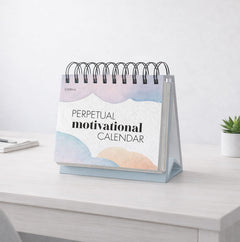
- Ours are 5.75" x 5.25" spiral-bound easel flip calendars with 365 undated pages, one for each day.
- They make a lasting desk accessory and an easy gift, but they show the date rather than manage a schedule.
What Is a Perpetual Calendar?
A perpetual calendar is a date-keeping tool made to be used indefinitely. Unlike a calendar printed for one year, it can be adjusted or simply reused to show any day, so there’s no need to replace it every January. That makes it both a practical and a lower-waste way to keep track of time.
Our perpetual calendars
A page for every day


Types of Perpetual Calendars
-
Mechanical
Found in high-end watches and some desk clocks. Gears and cams track month lengths and leap years automatically; many need no correction until the year 2100, when the century leap-year rule skips a February 29.
-
Manual
Rotating wooden blocks, sliding panels, wheels or magnetic tiles that you set by hand. They don’t calculate leap years, but they’re easy to update and loved for their vintage or minimalist look.
-
Undated flip calendars
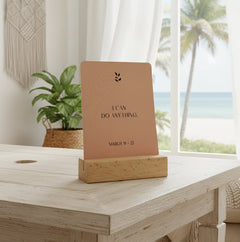
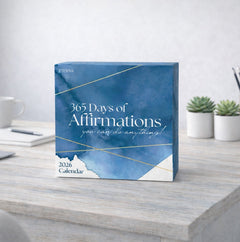
A page for each day of the year, labeled by month and date rather than year, so you can flip to today in any year. Ours add a quote, joke, fact or prompt to every page.
-
Digital
Widgets and smart displays styled after perpetual designs. Convenient, though they lose the tactile, decorative appeal of a physical calendar.
How Perpetual Calendars Work
The Gregorian calendar has a 7-day week and months of 28 to 31 days, and each new year shifts the weekday of any date forward by one day, or two after a leap day. That’s why January 1 doesn’t fall on the same weekday every year.
Mechanical perpetual calendars handle this with date wheels, month wheels and a leap-year cam that “remembers” the four-year cycle. Manual versions let you align the day, date and month yourself. Undated flip calendars sidestep the problem entirely: each page is tied to a date such as January 1, not to a weekday, so the same calendar works every year.

A Brief History
The idea of a calendar that copes with the Gregorian calendar’s irregularities goes back centuries. Watchmakers and clockmakers experimented with showing the day, date and month on one device, and printed perpetual charts let clergy, merchants and scholars find the weekday for any date without waiting for a new almanac.
Over time, perpetual calendar mechanisms became one of the most admired complications in watchmaking, and desktop perpetual calendars in metal and wood became fixtures on office desks. With smartphones, the need for one faded, but rather than disappearing, perpetual calendars found new life as design objects, conversation pieces and reusable alternatives to disposable calendars.
More to explore
History, fitness, puns and verses


Why Perpetual Calendars Remain Popular
-
Reusable
One purchase lasts year after year, with no new calendar to buy each January.
-
Design
From vintage to minimalist, a perpetual calendar doubles as desk decor.
-
A small daily ritual
Flipping a page each morning is a screen-free moment, and on ours it comes with something to read.
-
Collectibility
Watch enthusiasts prize perpetual calendar complications, and antique desk calendars are sought after for their craftsmanship.
-
Gifting
A perpetual calendar suits graduations, promotions, retirements and housewarmings because it keeps being used long after the occasion.
Where They Fall Short
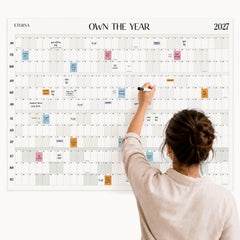
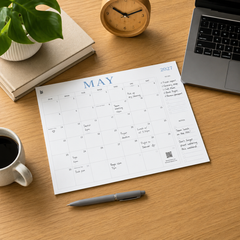
A perpetual calendar is a great date reference, not a planner. There’s no room for meetings or deadlines, no reminders and no syncing. If you need to manage a schedule, pair one with a planning calendar, such as a 22" x 17" flat desk calendar for the month or a giant Own The Year wall calendar for the whole year, and let your phone handle time-sensitive alerts.

Mindful and curious
Reflect, affirm and learn


Here’s something to mark every day, for years to come.
Common Questions
What is a perpetual calendar?
A calendar designed to be used year after year instead of being tied to one specific year.
How big are Eterna Goods perpetual calendars?
5.75" x 5.25" (width x height). Each is a spiral-bound easel flip calendar with 365 undated pages.
What’s the difference between a perpetual and a regular calendar?
A regular calendar is printed for one year and replaced when it ends. A perpetual calendar can be reset or simply reused, so it lasts much longer.
Are perpetual calendars still useful today?
Yes, as an at-a-glance date display, a daily ritual and functional decor. For scheduling, use one alongside a planning calendar.
A Timeless Way to Keep Track of Time
Perpetual calendars blend function, design and meaning. Whether it’s a mechanical masterpiece or a simple flip calendar on your desk, it’s a lasting alternative to disposable calendars and a small reminder to slow down. If you’d like a daily moment of motivation, history or humor, a perpetual calendar is a lovely place to start.
The collection
Find your perpetual calendar
Motivation, history, humor, fitness and more. Each one is 5.75" x 5.25" with 365 undated pages you can use year after year.
Shop Perpetual Calendars